

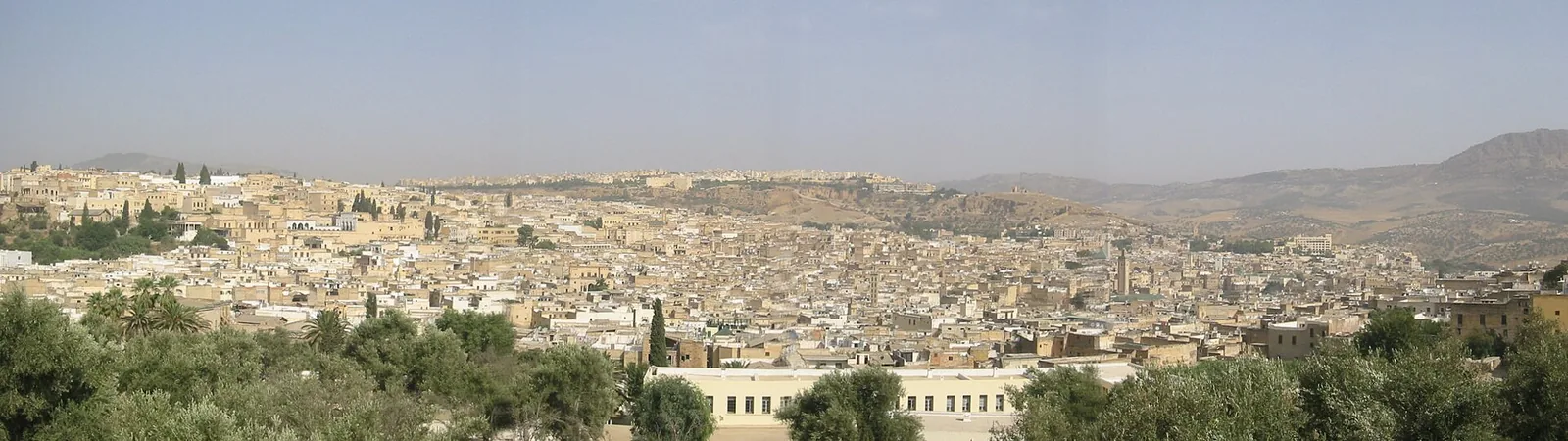
Fes is the most intact medieval city in the Arab world. Its medina, Fes el-Bali, holds 9,400+ alleyways, no cars, the world’s oldest continuously operating university (Al Quaraouiyine, founded 859), three working tanneries, and a way of life that hasn’t fundamentally changed since the 12th century. There is no other city like it.
This guide gives you what most travel sites bury under inspiration paragraphs: how to navigate a medina that genuinely loses people, what is worth your time, where to eat, where to sleep, and how to use your 2–4 days here without burning out. Last reviewed May 2026.
⚡ Fes quick facts
- Best for: History, architecture, traditional crafts, slow travellers
- Skip if: You hate uneven paving, get overwhelmed in dense crowds, or want resort comfort
- Time needed: Minimum 2 nights, ideally 3 for the medina depth
- Best season: March–May and September–November (medina is hot in summer)
- Budget per day: €60–120 mid-range riad, €200+ luxury riad
- Last reviewed: May 2026
Why Fes is unmissable
If you only visit one Moroccan medina, make it Fes el-Bali — not Marrakech’s. Marrakech is more famous, more polished, more set up for tourists. Fes is rougher, denser, more honest, and infinitely older. The Marrakech medina was rebuilt many times; Fes el-Bali is essentially the city that Idris II laid out in 808 CE.
Travellers who connect with Fes tend to be those interested in living history — workshops where artisans still hammer brass plates the same way they did 600 years ago, herbalists who know what each root does, dyers up to their elbows in indigo. Travellers who leave disappointed wanted easy beauty and got dense, demanding intensity.
7 best things to do in Fes
1. Chouara Tannery ⭐ Don’t miss
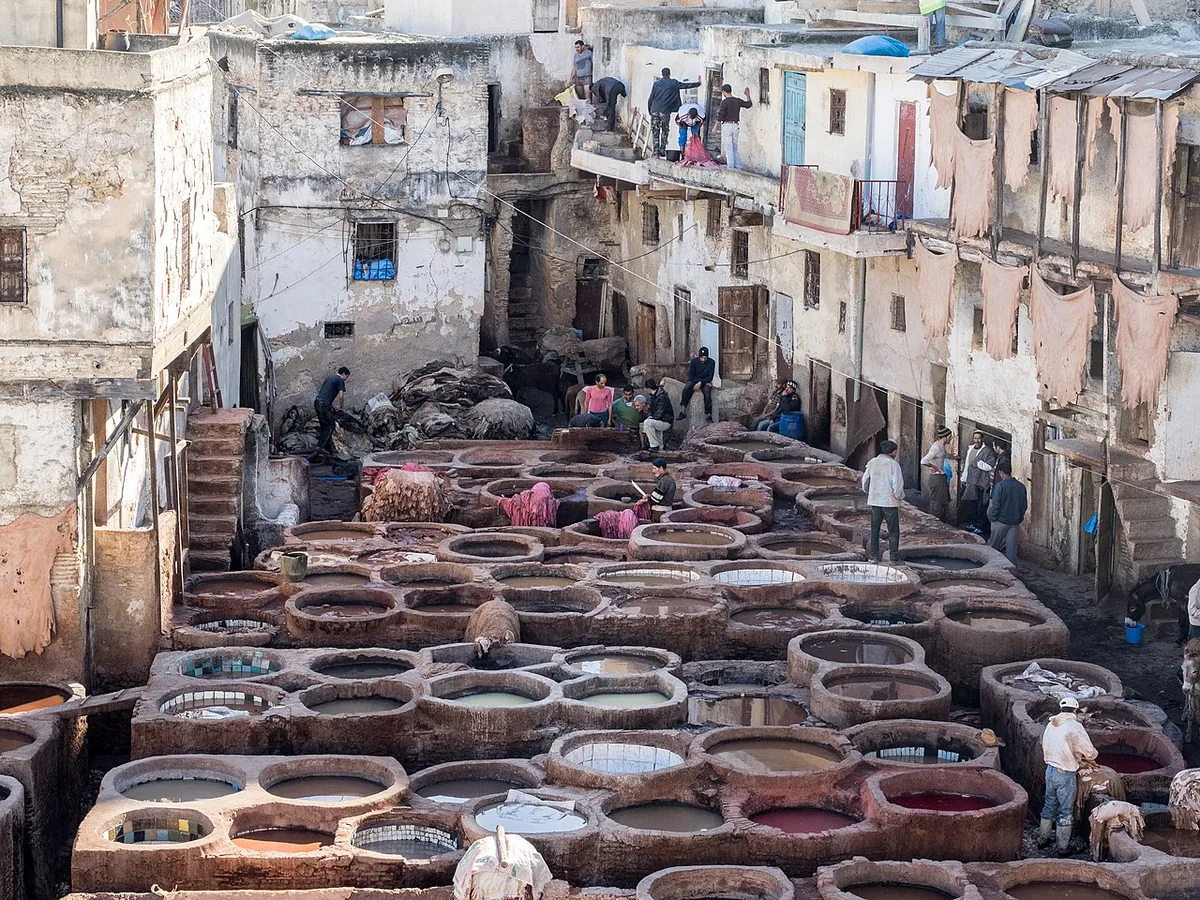
The Chouara is the oldest of Fes’s three tanneries — circular stone vats filled with white limestone wash and then coloured dye, where workers prepare leather using a method essentially unchanged since the 11th century. Viewing terraces sit above; leather shops at street level let you onto their roof for a view (you’ll be expected to look at their goods after, but no obligation to buy). Bring a sprig of mint to hold under your nose.
Practical: Open daily roughly 9am–5pm. Free to view from terraces (small tip 10–20 MAD if a shop owner lets you up). Best in morning for light. Less pungent in winter.
2. Medersa Bou Inania
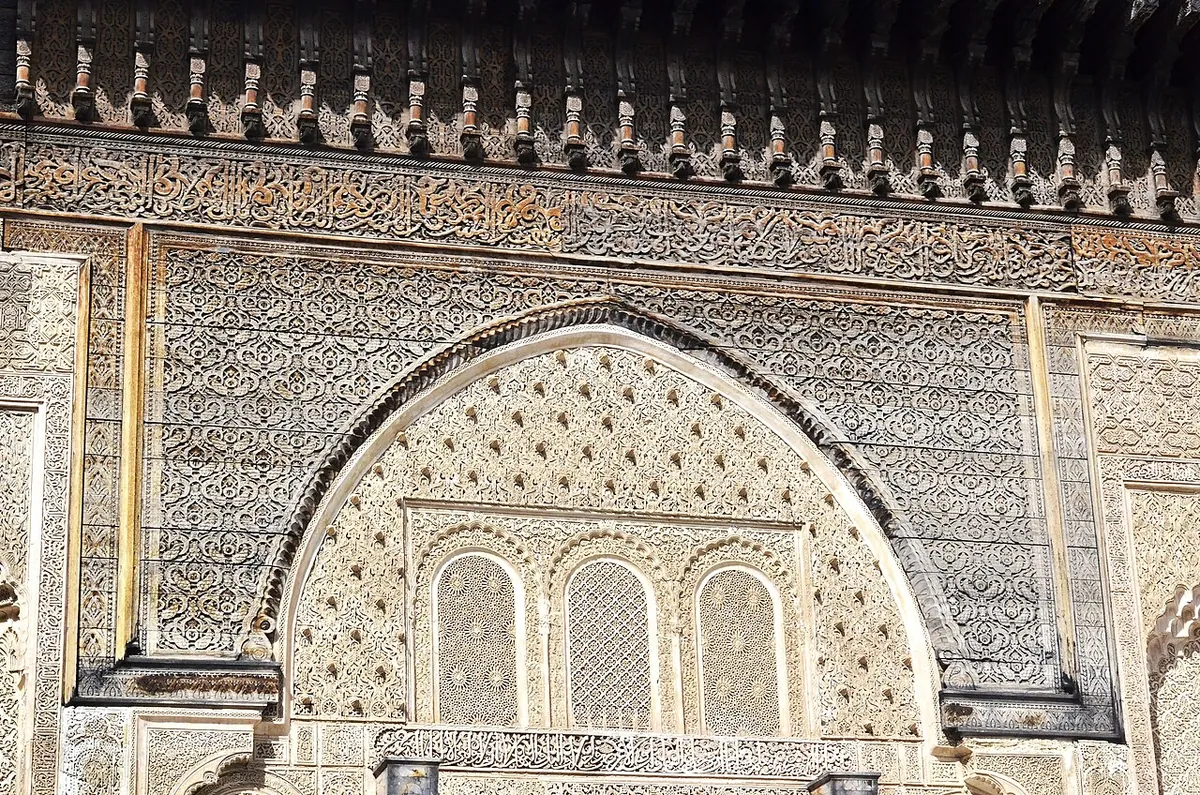
Built 1351–1356 as a Quranic school under Marinid sultan Abu Inan Faris. Inside is a courtyard of carved cedar, plaster muqarnas, marble, and a continuous strip of zellige tilework that would justify the city visit on its own. One of only two medersas in Fes that non-Muslims can enter. Spend 30–45 minutes.
Practical: Open daily 9am–6pm. Entry 20 MAD. On Talaa Kebira, 5 minutes from Bab Boujloud.
3. Bab Boujloud (Blue Gate)
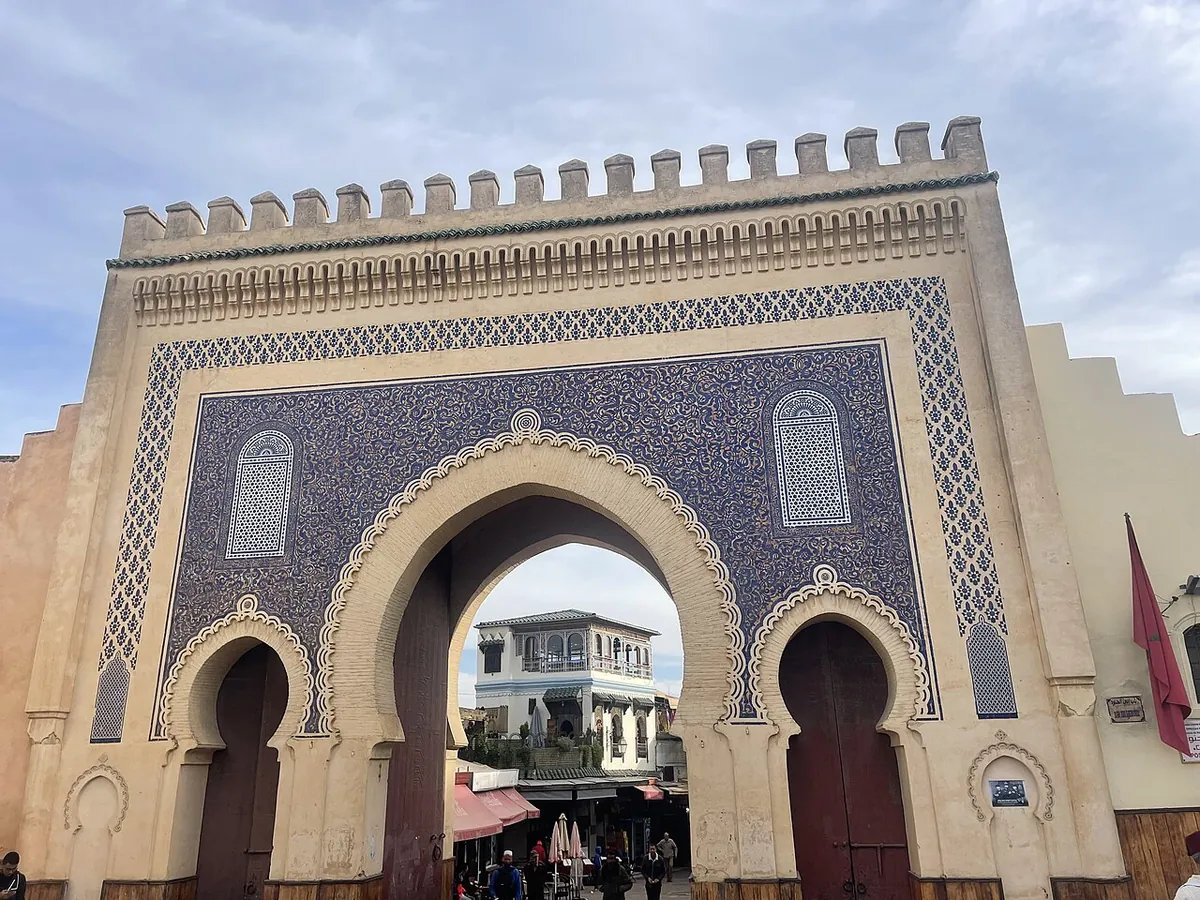
The most photographed gate in Morocco — blue zellige outside facing the new town, green inside facing the medina. Built in 1913 in Moorish revival style. Practical use: this is the main pedestrian entrance to Fes el-Bali and where most riad transfer cars drop you. Two cafés on either side make a useful meeting point.
4. Al Quaraouiyne Mosque & University
Founded in 859 CE by Fatima al-Fihri, a Tunisian-born woman, this is the world’s oldest continuously operating university — and one of the largest mosques in Africa. Non-Muslims cannot enter the prayer hall, but you can peek through the doors and visit the adjacent Attarine Madrasa (1325, equally exquisite zellige work, entry 20 MAD) for the architectural experience.
5. Place Seffarine (Coppersmiths’ Square)
A small open square in the heart of the medina where coppersmiths still hammer giant trays and lanterns by hand. The percussion is constant during work hours. Stop for mint tea at the tiny Café Clock-affiliated café on the corner and watch craftsmen work as you would in 1500.
6. Borj Nord viewpoint at sunset
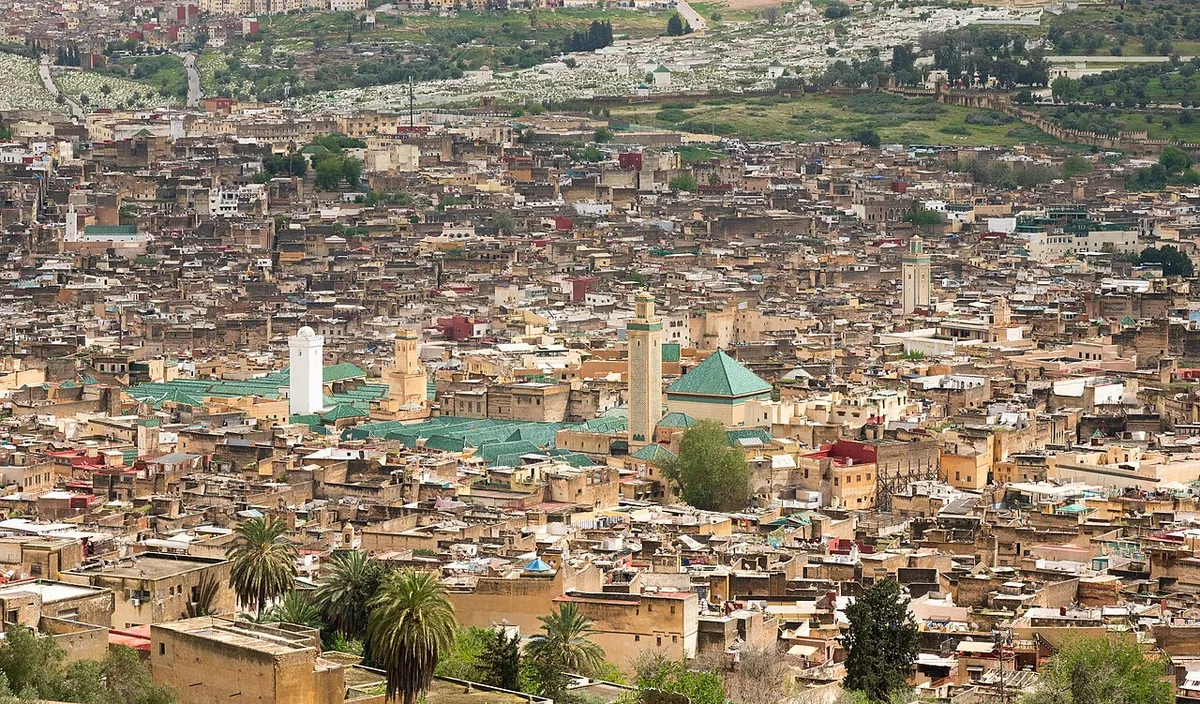
The single best view of the entire medina sits on a hill north of Fes el-Bali — Borj Nord, a 16th-century Saadian fortress. Watch the medina light up as evening prayers begin. Take a petit taxi up (~20–30 MAD); it’s a steep walk down. The Marinid Tombs viewpoint above offers the same panorama and is free, but exposed to wind.
7. Souk shopping (selectively)
Fes does specific crafts better than Marrakech: brass and copperware (Place Seffarine), traditional Moroccan slippers and leather (around the tanneries), natural cosmetics and perfumes (Souk el-Attarine), woven textiles and carpets (Talaa Kebira workshops). Avoid the rush hours (11am–2pm); shops are calmer late afternoon.
Book a guided medina tour or food experience For day one in the Fes medina a licensed guide pays for itself – they know the workshops with no commission pressure and translate the layout.
- Fes medina half-day guided tour (English)
- Fes food walking tour with cooking demo
- Fes day trip to Volubilis & Meknes
Affiliate disclosure: CityQuest Morocco may earn a small commission if you book through these links — at no extra cost to you. We only link to operators we’d use ourselves.
Navigating the medina (and getting lost)
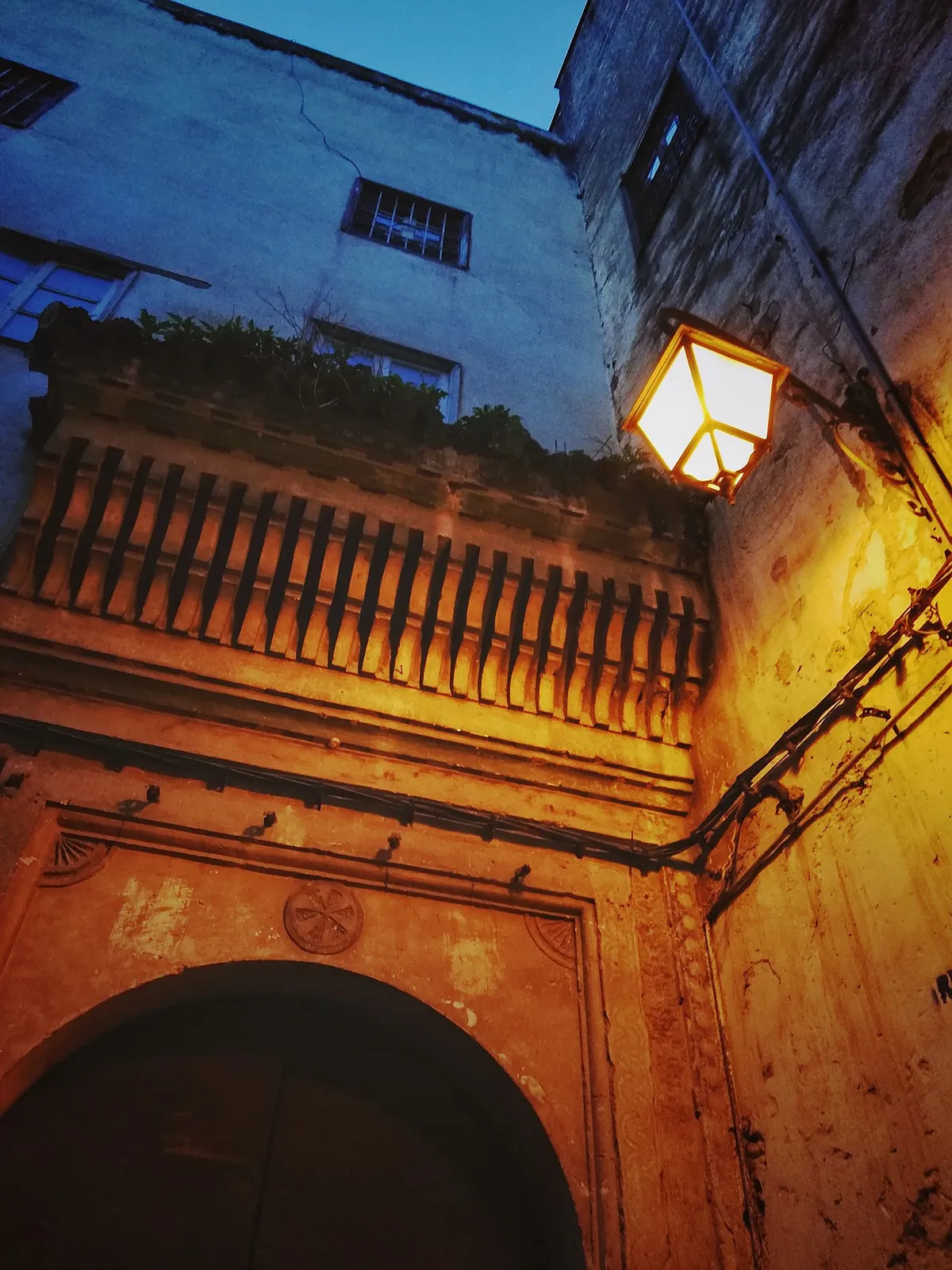
Fes el-Bali genuinely loses people. 9,400+ alleyways inside walls that enclose 280 hectares, no street signs in many parts, intentionally confusing layout (originally designed so invading armies couldn’t find their way to the centre). Three tactics:
- For your first day: hire a licensed guide (~€30–50 for a half-day). They show you the orientation, the sights, and where the artisan workshops with no tourist mark-up are. After that you have a mental map and can wander solo.
- For solo wandering: remember “Tala’a Kebira” (the main descending street from Bab Boujloud) and “Tala’a Sghira” (the smaller parallel one). Almost everything important sits between them.
- When lost: follow downhill if you’re trying to get to the centre. Follow uphill if heading back to Bab Boujloud. If desperate, offer 10 MAD to a kid to walk you out — they will know.
Where to stay in Fes
| Area | Vibe | Price band | Best for |
|---|---|---|---|
| Fes el-Bali (medina) | Traditional riads inside the medieval city | €60–400 | Atmosphere, immersion |
| Bab Boujloud area | Riads at the medina edge — easy taxi access | €80–200 | First-timers wanting medina but easy in/out |
| Ville Nouvelle (new town) | Modern hotels, French planning grid | €60–250 | Business travellers, accessibility |
| Fes el-Jdid | The 13th-century “new” royal quarter — quieter | €70–150 | Budget-conscious, less tourist crush |
For specific riad recommendations across budgets, see our Best Riads in Fes Medina guide. For a wider comparison of each area — medina riads, Bab Boujloud, or the Ville Nouvelle — and which one suits a first trip, see Where to Stay in Fes.
Food and where to eat
Fes is the gastronomic capital of Morocco — many of the dishes other cities serve as “Moroccan food” were perfected here. The city specialises in slow stews (lamb tagine with prunes, pigeon pastilla, harira soup), elaborate spice mixtures (the famous ras el-hanout originated as a Fes spice merchant’s personal blend), and pastries.
- Café Clock (Talaa Kebira) — the original culture café in the medina; camel burger, cooking classes, music nights. Touristy but consistently good. ~€10–18 per person.
- The Ruined Garden (near Pasha Baghdadi) — restored riad garden, slow food, lunch only, excellent salads and seasonal tagines. €25–40 per person.
- Dar Hatim (off Talaa Sghira) — family-run dar where you eat in a restored 14th-century home. Set menu, advance booking required. The most memorable Moroccan meal you’ll have. €30–45.
- Patisserie Bennis-style spots in the souks — ask for chebakia, briouates, m’hencha. Sold by weight from glass cases.
Getting to Fes and around
Arriving by air
Fes-Saïs Airport (FEZ) is 15 km south of the city. Limited international connections (Paris, Madrid, some seasonal). Most travellers fly into Casablanca CMN and take the train (3h 30, €15–30, hourly). The Casablanca-Fes route via Rabat is one of Morocco’s easiest train rides.
Train from Marrakech / Tangier
Marrakech-Fes: 7-8 hours direct train (€25–45). Most travellers prefer to break in Casablanca. Tangier-Fes: 4 hours via the Al-Boraq high-speed line (€20–35). Casa Voyageurs to Fes: 3h 30 (€15–30). Train station is in the new town; petit taxi to medina riads is 20–40 MAD.
Inside Fes
The medina is car-free (and cart-only). All movement inside is on foot. Petit taxis (red, metered) connect the new town and the medina edges (Bab Boujloud, Bab Rcif, Bab el-Guissa). Fares within the city are 15–30 MAD.
Practical tips and what to skip
- Don’t try to do it all in one day — the medina deserves a slow build of orientation. Day 1 with a guide, day 2 wandering solo.
- Skip: the “official tannery viewpoint” sign trail in the high-tourist area near Bou Inania — you’ll be funneled to a high-pressure leather shop. Walk further into the tanneries district instead.
- Modest dress in the medina is more important than in Marrakech. Shoulders and knees covered. Women: a light scarf in your bag for unexpected mosque visits.
- Cash: ATMs at Bab Boujloud and Bab Rcif. The deep medina is cash-only.
- Beware unofficial guides at Bab Boujloud — many will offer to “just walk you to your riad” and demand €15–20 at the end. Pre-arrange a free transfer with your riad.
- Friday afternoons: many shops close for prayers from 12:00–14:30. Plan accordingly.
📱 Stay connected in Morocco
Get a Morocco eSIM before you fly — instant activation, no roaming, around €5–15.
Affiliate link.
FAQ — Fes
How many days do you need in Fes?
Minimum 2 nights / 1.5 full days. Ideally 3 nights / 2.5 days. The medina is too dense to absorb in less, and you’ll want one slow day where you don’t plan anything specifically.
Is Fes safer than Marrakech?
Comparable. Both cities have very low violent crime against tourists. Fes has more aggressive unofficial guides at the gates (hassle level above Marrakech), but less pickpocketing risk in the medina (denser community, harder to disappear). Standard precautions apply in both.
Should I get a guide for the medina?
For your first day: yes. Hire a licensed guide (~€30–50 half-day) through your riad. They orient you, show you the workshops with no commission pressure, and explain the etiquette of haggling. After the first day you can wander solo with a much better mental map.
Is Fes a good first Moroccan medina?
Honestly — no. Marrakech is gentler. Fes is more impressive but more demanding. If your trip allows, do Marrakech first to build your medina muscle, then come to Fes for the depth. If Fes is your only stop, hire a guide for day one.
How long to get from Casablanca to Fes?
3 hours 30 minutes by direct train (ONCF, hourly). €15–30 second class, €25–40 first class. The Al-Boraq high-speed train takes 1h 50 from Tangier; from Casablanca you transit at Kenitra. Book on oncf.ma.
Is Fes too overwhelming for first-time visitors to Morocco?
For some travellers, yes. The density of the medina, the smells of the tanneries, the constant motion — it can be too much. If overwhelm is a concern, ease in: 2 nights in a Bab Boujloud–edge riad with a guided first morning, plus your evenings inside the riad walls for recovery time.
Can you visit the Karaouiyne mosque if you’re not Muslim?
You can’t enter the prayer hall, but you can stand at the open doors and see in. The adjacent Attarine Madrasa (1325, entry 20 MAD) gives you the same Marinid architectural experience and is one of the most beautiful interiors in Morocco.