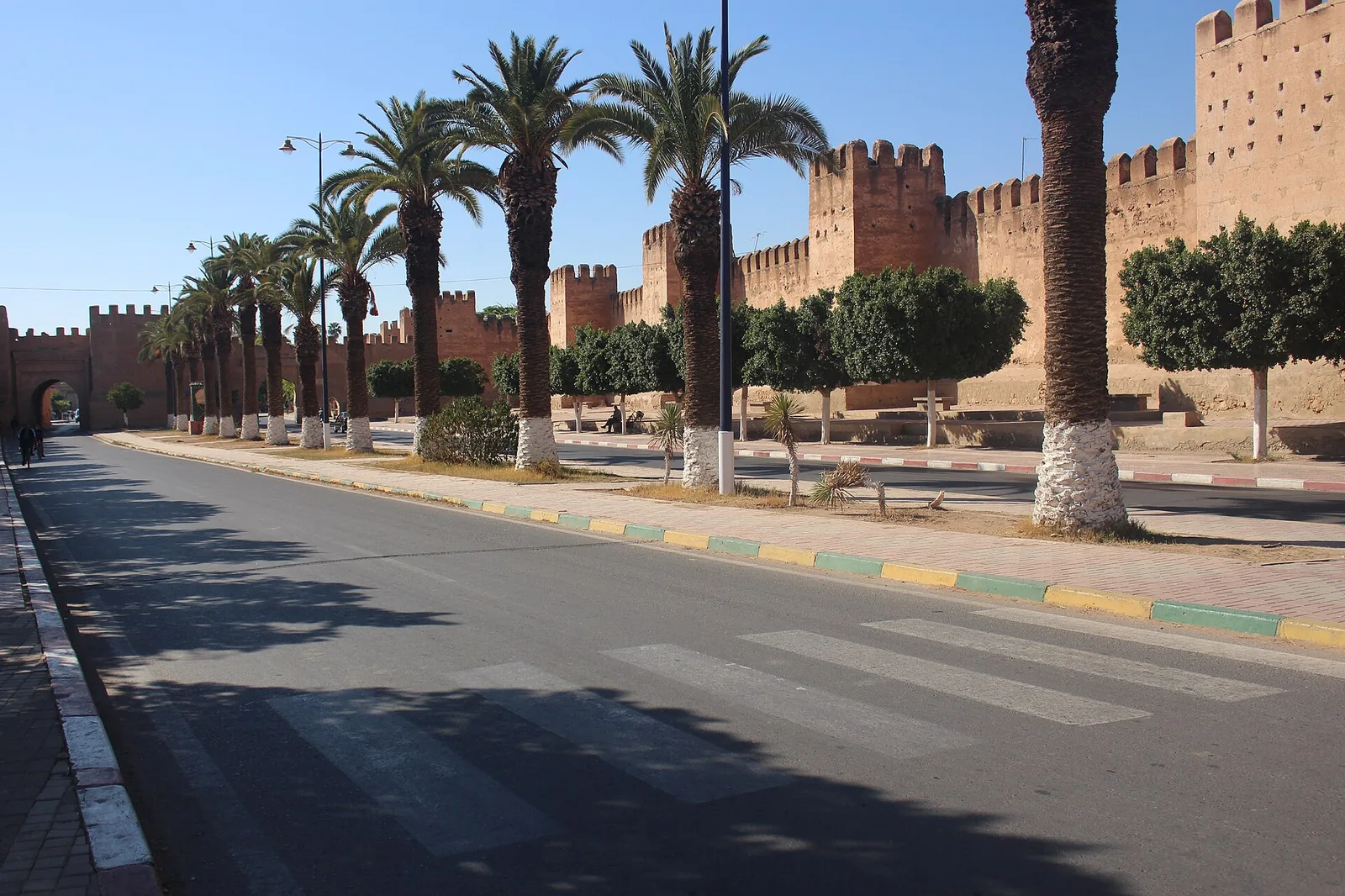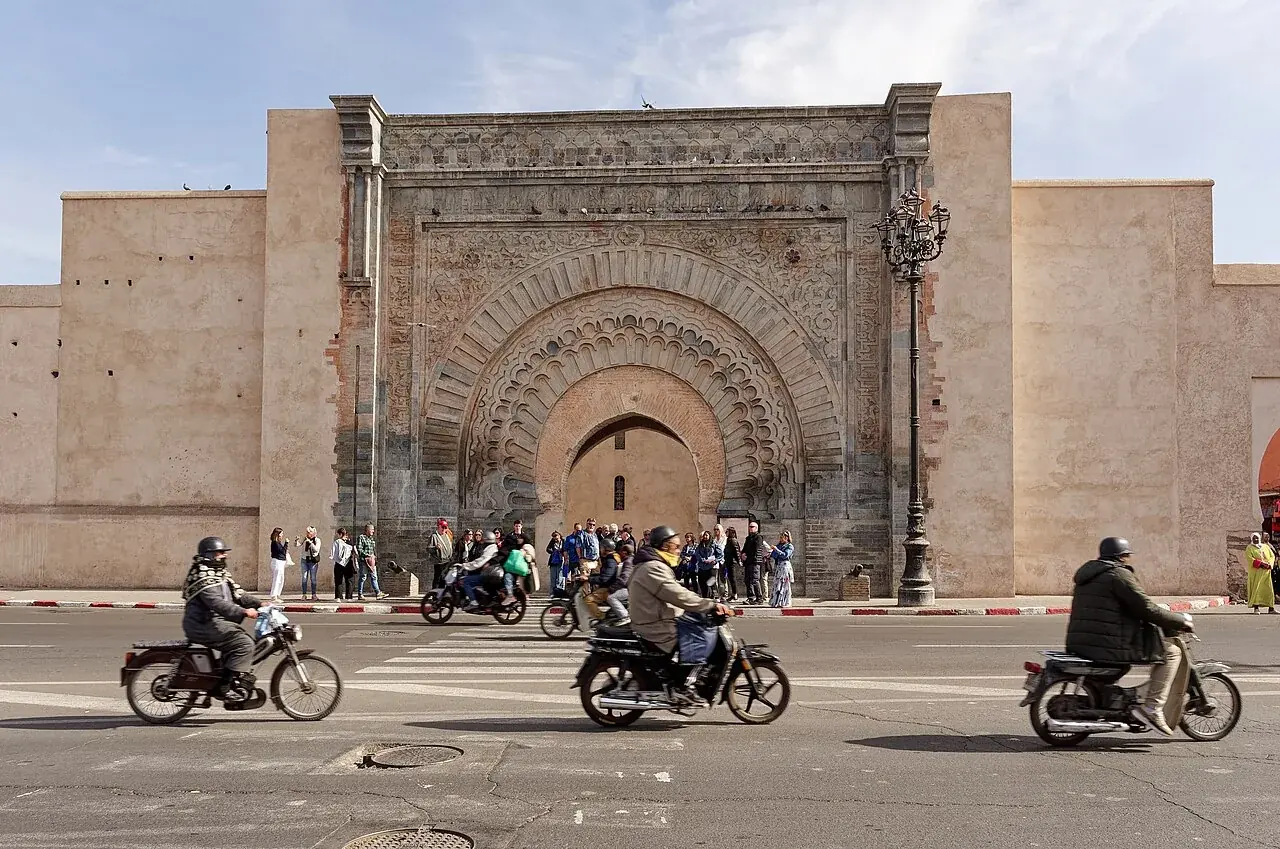
Start a Marrakech Kasbah walk at Bab Agnaou. The carved gate leads into a small area with several layers of history: an Almohad mosque, the Saadian royal tombs, a ruined palace and streets people still use to work and shop. Take one morning to read the landmarks in order. A gate, a grave and a palace tell three very different stories about who used this part of the city. The nearby Mellah makes a good extension if you still have time.
Last reviewed: November 25, 2026.
Short answer: Allow 2–3 hours for Bab Agnaou, the Kasbah Mosque exterior, Saadian Tombs and El Badi Palace. Start at the gate, go to the tombs first if the queue is short, and finish at Place des Ferblantiers. The Ministry's ticket pages show 100 MAD per foreign adult at each paid site, or 200 MAD for both.
- Location Southern Marrakech medina, focusing on Bab Agnaou and the Kasbah Mosque
- History The Kasbah belongs to the city's Almohad era. The tombs and El Badi preserve important Saadian work
- Time Two to three hours, plus any queue or extension into the Mellah
- Tickets Two paid stops. Bab Agnaou and the mosque's street view are outdoor stops
- Best starting point Bab Agnaou. Agree on the street-side meeting point if arriving by taxi
What the Kasbah is and why it matters
The Kasbah is a historic fortified quarter in the south of the medina. The UNESCO description of Marrakech places the Kasbah, city walls and important gates among the city's surviving Almohad monuments. The name still refers to a working neighbourhood around the old royal area. On the street, the contrast is sometimes only a few steps: one side of a wall carries centuries of building history and the other is part of an ordinary route to a shop.
Later, the Saadian dynasty left monuments with different purposes. At the tombs, decoration marks a place of burial and remembrance. At El Badi, the size of the court is a clue to a palace intended for large audiences and display. It is worth seeing both if you have time. Even with only one interior visit, reading the gate and mosque frontage first gives the tombs more context than arriving straight from the square.
- 1070–1072 UNESCO dates the foundation of Marrakech to these years under the Almoravids.
- Late 12th century The Almohad royal Kasbah takes shape in the south of the city.
- 1557 The Ministry of Culture dates the core of the Saadian royal burial site to this year.
- Late 16th century Sultan Ahmad al-Mansur commissions El Badi Palace.
- 1591 Ahmad al-Mansur buries his mother, Lalla Messaouda, at the tombs.
- 1917 The Ministry dates the tombs' rediscovery by the Fine Arts and Monuments Service to this year.
- 1985 The Medina of Marrakesh is inscribed on the UNESCO World Heritage List.
Map and boundaries
Keep three pins handy: Bab Agnaou at the approach, Saadian Tombs by the mosque, and El Badi Palace towards Place des Ferblantiers. Keep the ticket entrance and the landmark as separate map ideas. The nearest wall is rarely the door.
The neighbourhood loop stays on the south side of the medina. The square also makes the handoff to the Mellah, which is a distinct quarter. If you started near Jemaa el-Fna, the one-day Marrakech itinerary helps put the southern stops in the context of the full city. Use this page for the time within the Kasbah itself.
Five stops in and around the Kasbah
1. Bab Agnaou
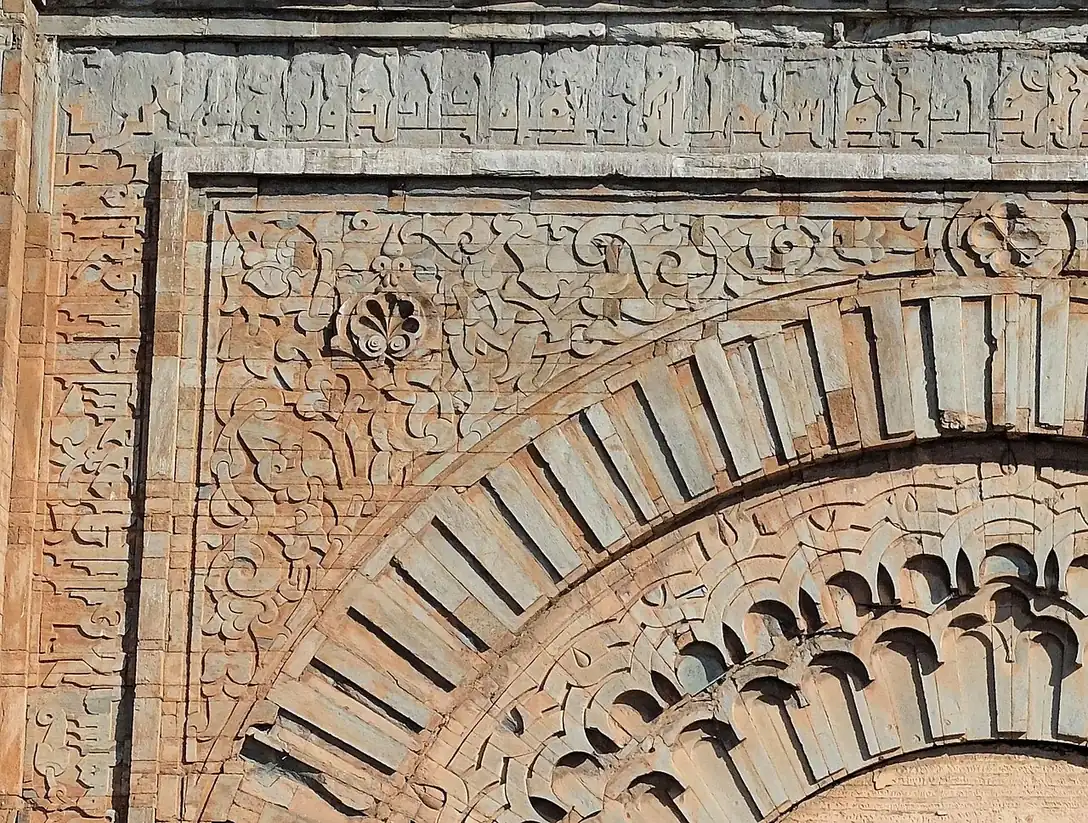
Use the stone gate as your first reference point. Move to a safe spot on the pavement and look at the whole arch before looking at its bands of carved detail. At street level the gate still sits beside moving traffic, so a doorway that looks central on a map may be a poor place for a group to stand. Take the exterior stop before going down the smaller streets, where it will be harder to take in the whole structure from one place. The gate is the best place to understand what an arrival into the old fortified quarter would have looked like.
2. The Kasbah Mosque exterior
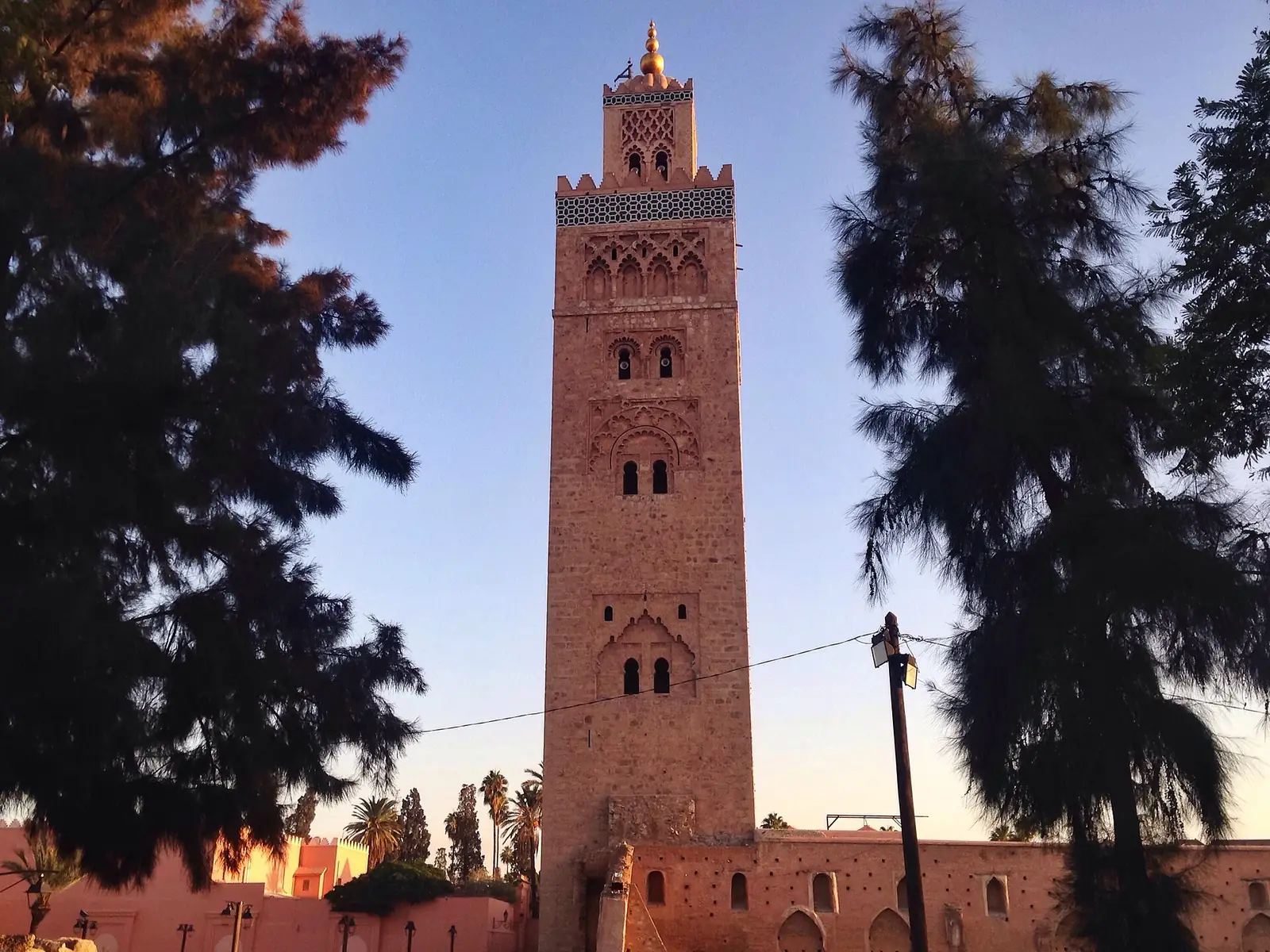
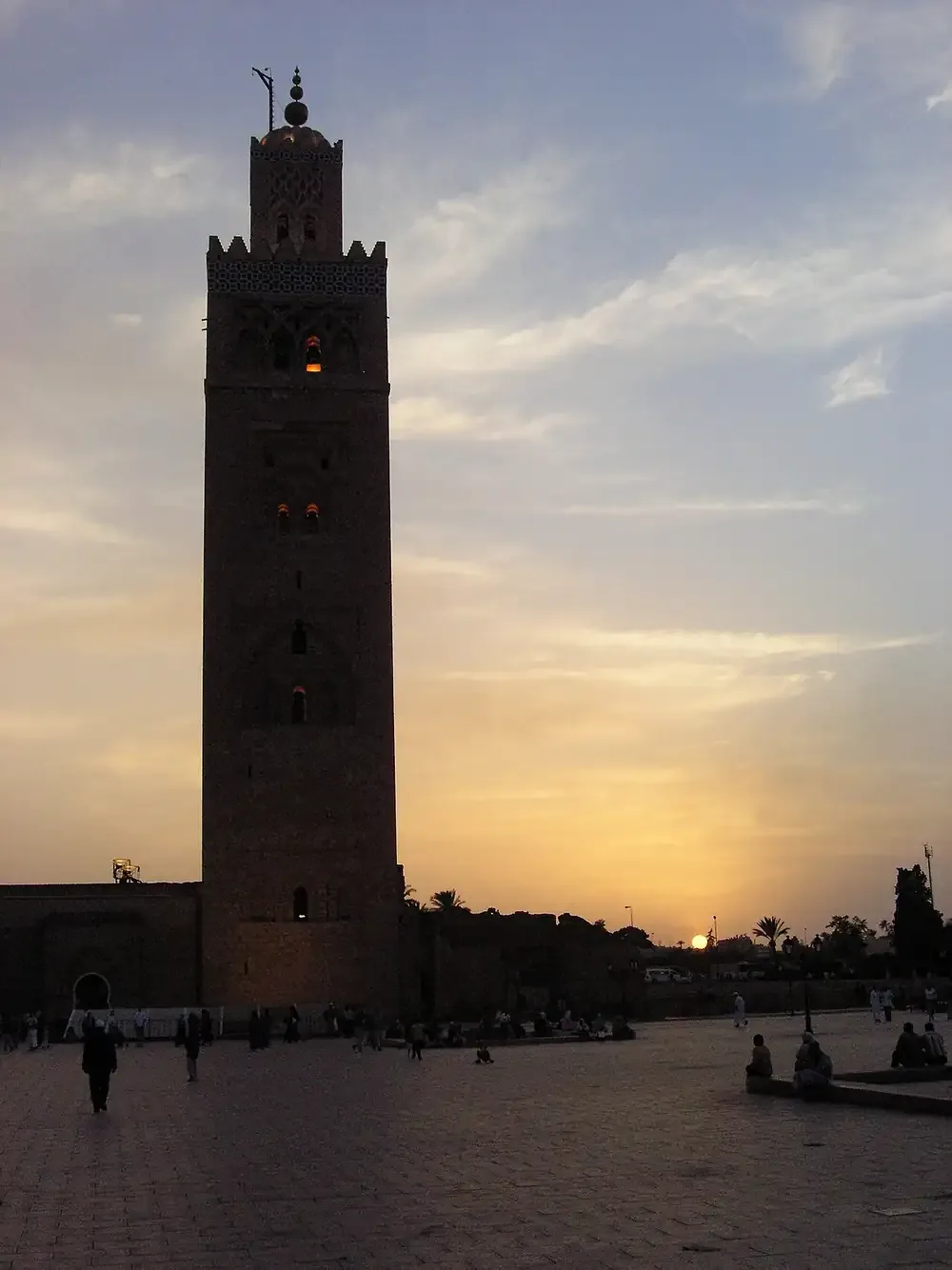
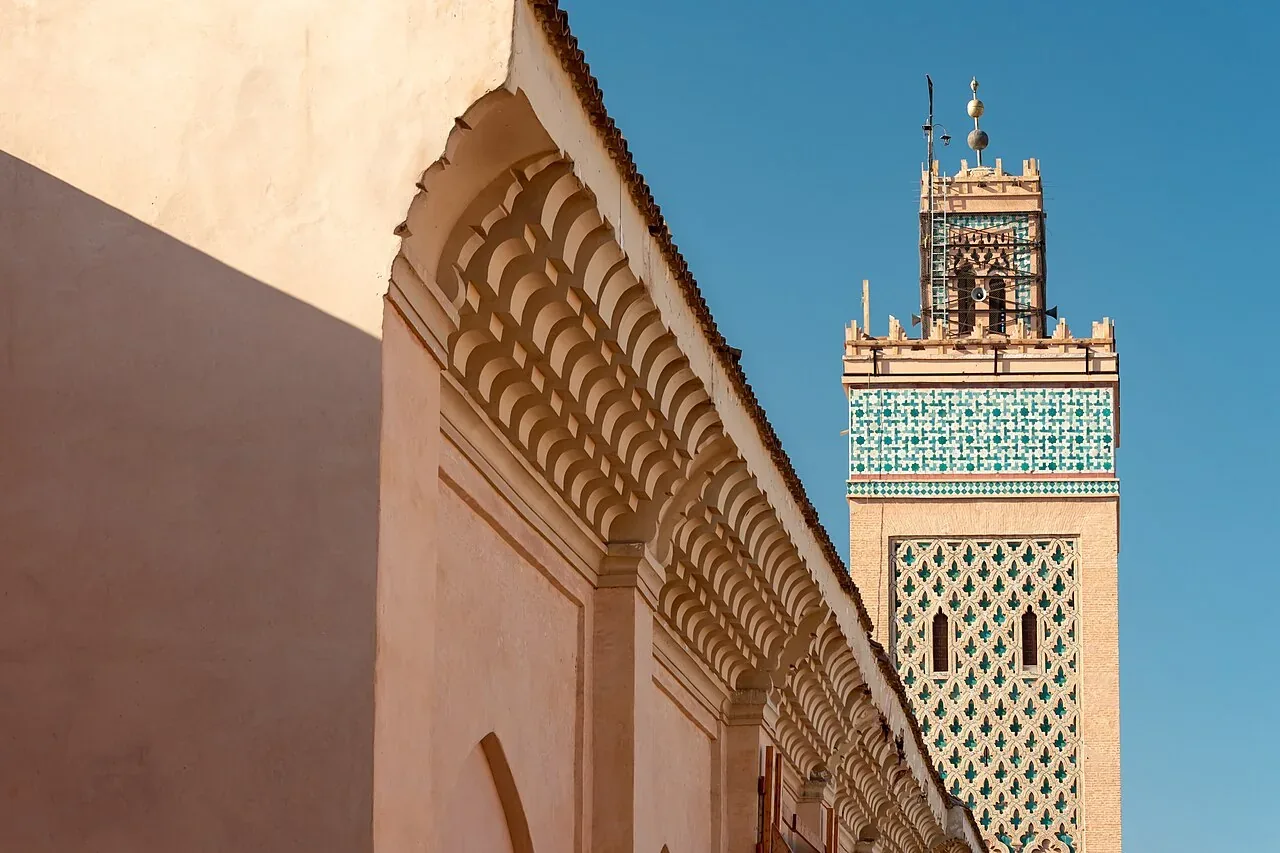
The mosque is also known as the Moulay al-Yazid Mosque. Look up at the minaret and its patterned surface before continuing towards the tombs. The street approach makes it possible to see the relationship between the mosque, the Kasbah lanes and the neighbouring burial site. Plan on an exterior visit. Give people room near the mosque entrances, especially around prayers, and photograph the architecture from a position where you are clear of the doorway. The mosque and the tombs have different uses and access arrangements even though they are close together.
3. Saadian Tombs
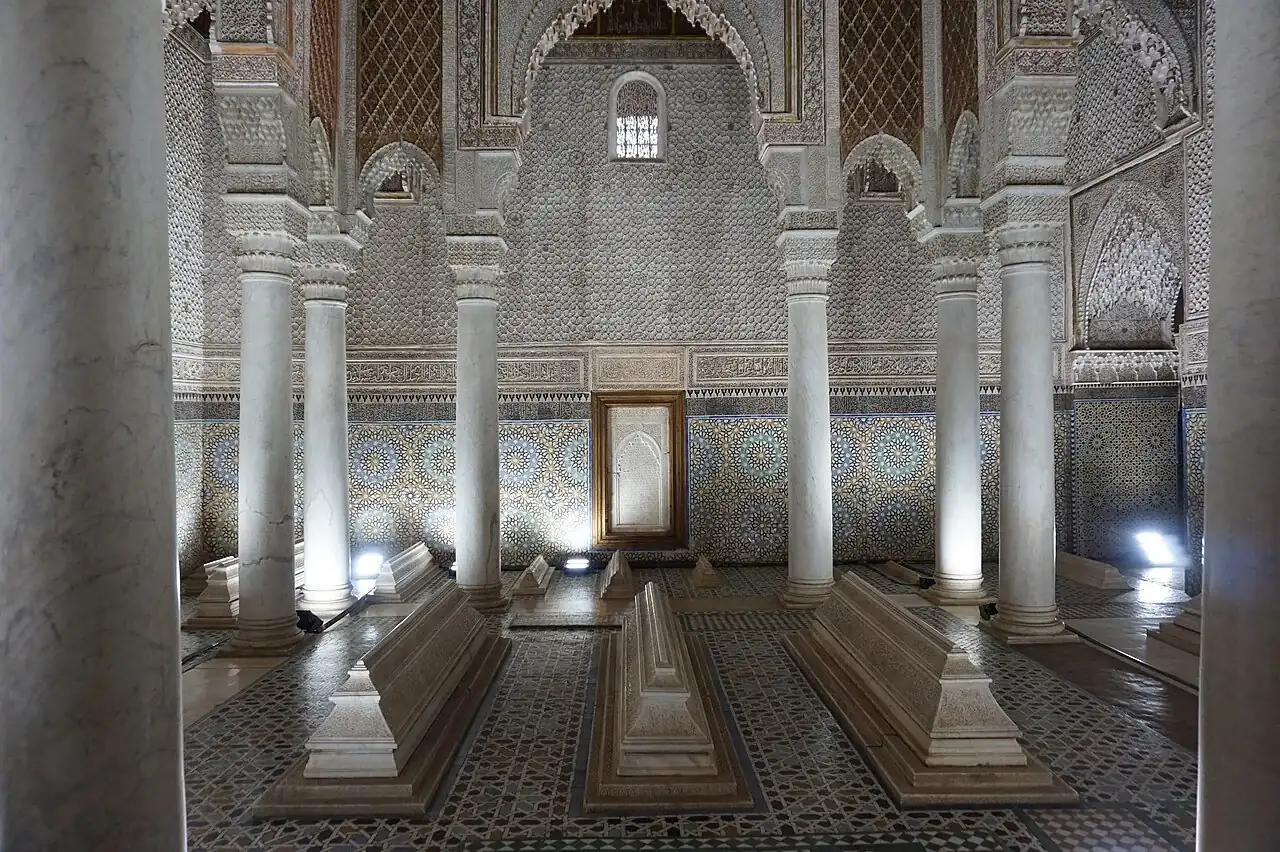
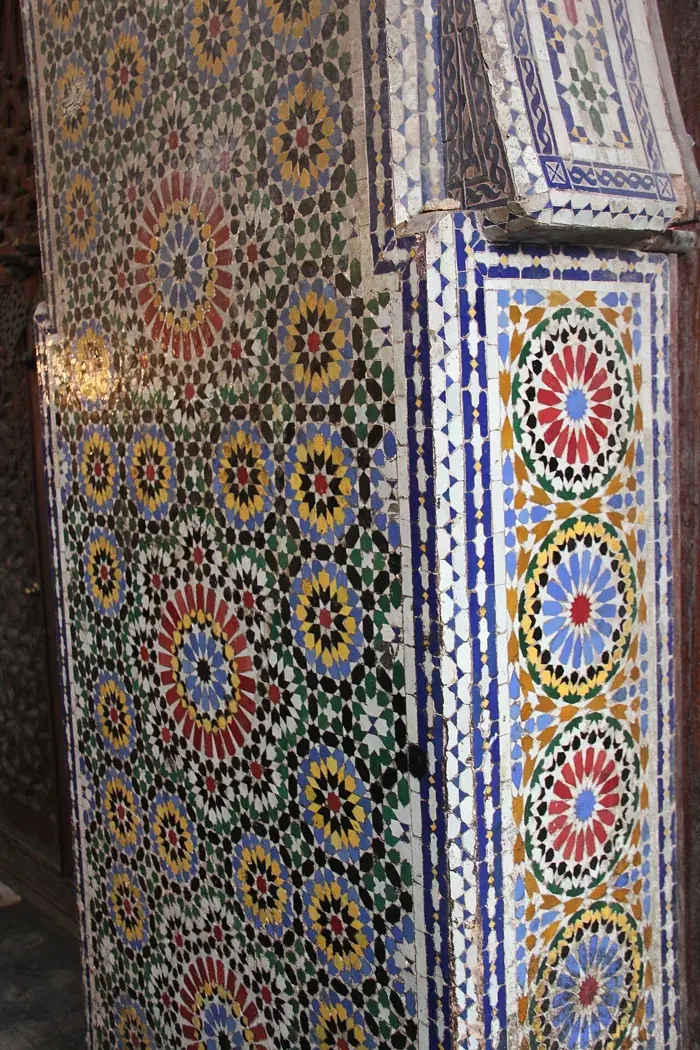
Don't miss this if you have time for one interior: The tombs reward a visit focused on detail rather than distance. The Ministry describes several rooms and burial structures. The hall associated with its twelve columns illustrates how marble, surface decoration and the proportions of a room can work together. Entry to the site does not mean unrestricted access to every chamber. Follow the route and viewing arrangements in place. A line at a narrow viewpoint can move differently from a ticket line outside. The Ministry ticket page for the tombs is the place to check the listed price and opening hours.
4. El Badi Palace
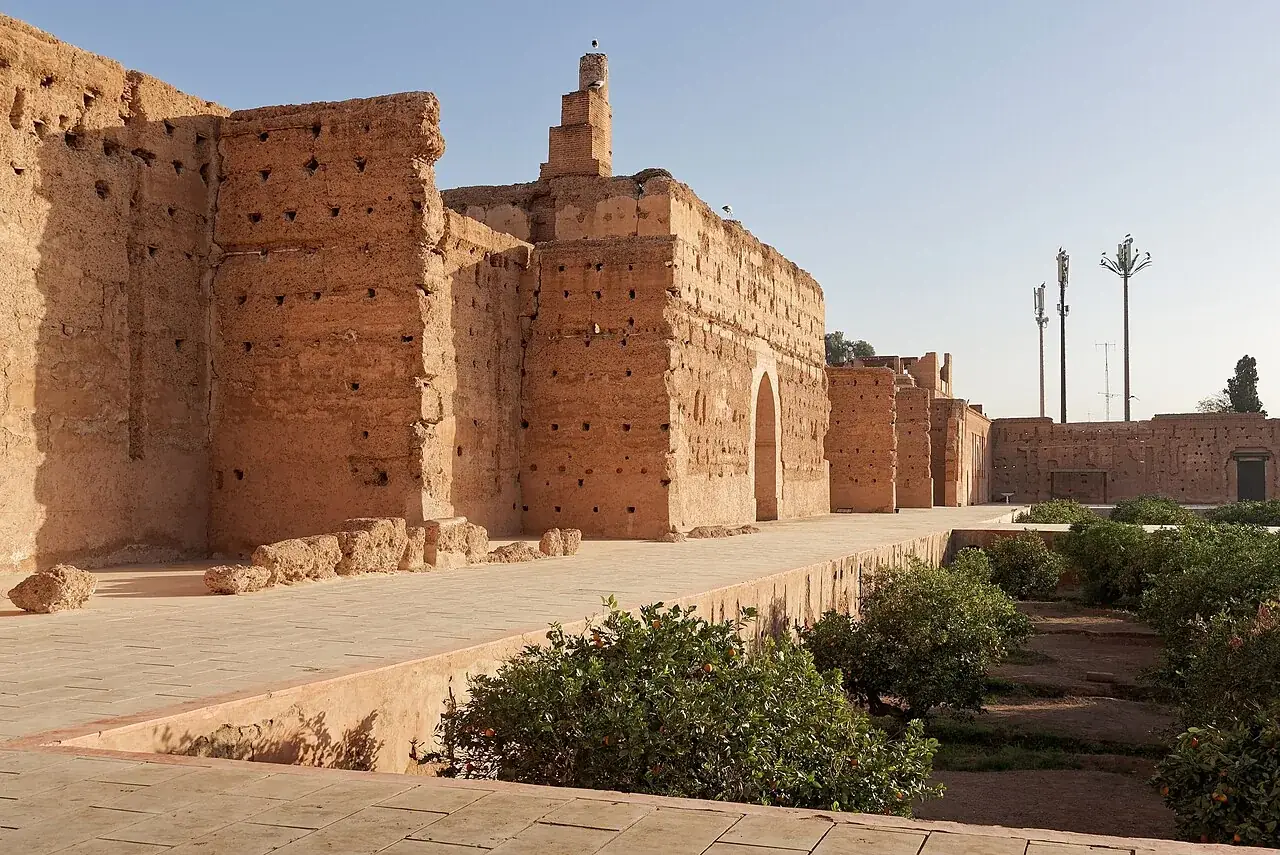
El Badi gives a sense of scale after the close views at the tombs. Walk the edges of the broad court and look back across it from more than one side. The walls, pools and spaces between the ruins help explain the ceremonial ambition of the place. It is an outdoor-heavy site, so adjust your pace to the weather and available shade. Steps and uneven surfaces are worth checking before you commit if anyone in the group has limited mobility. Use the El Badi ticket page for current admission. The national tourism office's Marrakech guide is the reference used here for its Saadian origins.
5. Place des Ferblantiers
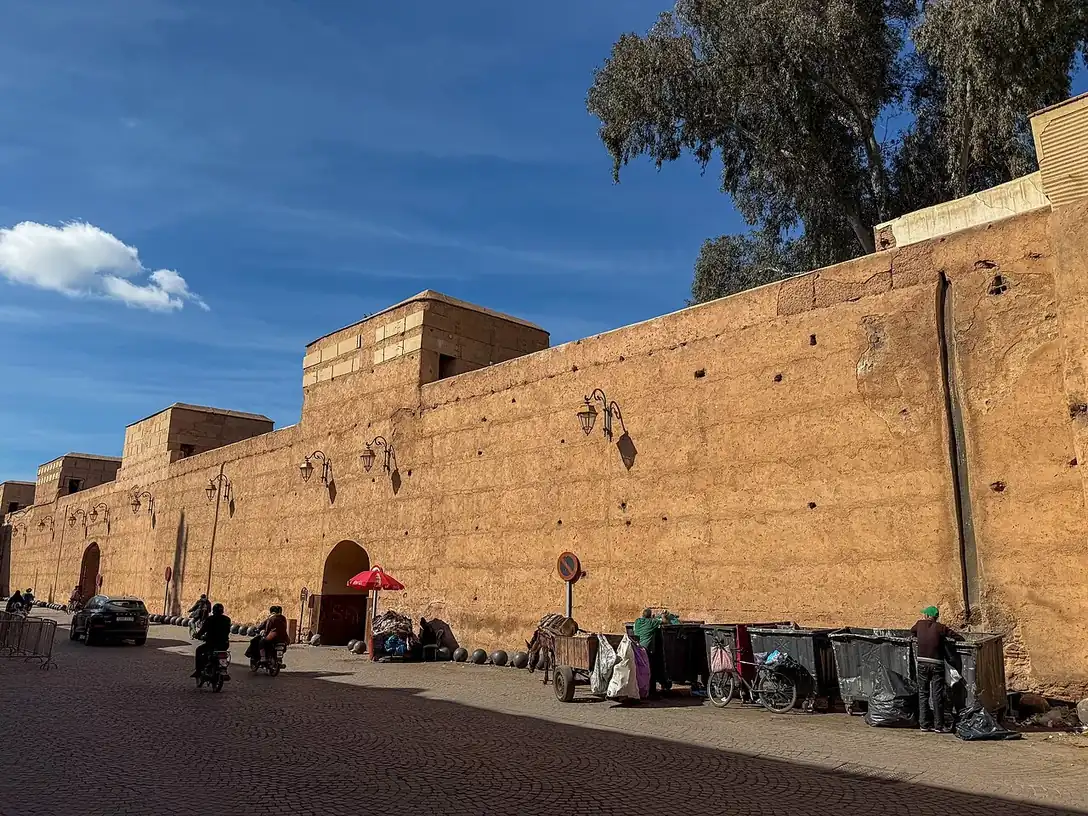
The square works as a stopping point after El Badi and a decision point for the next part of the day. End here if you are hungry or short of time. Continue towards the Mellah if you want to understand a different part of the south medina. Make Bahia Palace a separate decision because it brings another admission and more time indoors. The Marrakech Mellah guide gives that neighbourhood its own history and walking plan. Even when several gates and walls look similar, the street activity and the context of each place will help you orient yourself.
How to walk it with less backtracking
The usual order: Bab Agnaou → Kasbah Mosque exterior → Saadian Tombs → El Badi → Place des Ferblantiers. Start with one short exterior stop and decide at the tombs whether the queue suits the morning. If you came specifically for the tombs, stay with that plan and shorten the rest. If you would rather walk than queue, go on to El Badi and return to the tombs only if there is enough time.
With one hour: Keep the gate and mosque, then choose a single paid stop. El Badi suits people who want room to move outdoors. The tombs suit people who want stone, tile and ornament. Both easily fill a long visit once you count the entrances, walking and any wait.
With half a day: See both monuments, stop at the square and add either Bahia or a Mellah walk. Our Palaces & Gardens Quest is a separate self-guided route for travellers who prefer a series of stops and observation clues.
Practical details for the visit
The Ministry currently lists the two paid monuments as open 9 am to 5 pm. Check each official ticket page before leaving. The listed standard foreign adult total for the two sites is 200 MAD. Resident and child prices have their own tiers. The safest use of a short morning is to decide which visit you want most, then allow for a ticket check and the time it takes to see the place itself.
Wear shoes with grip on uneven paving. Use a named gate as a taxi meeting point and choose a landmark with space to wait. For accommodation arrivals, ask the host for a road-accessible handoff and check the Marrakech airport transfer guide before booking. Our Marrakech neighbourhood guide helps you decide whether to sleep nearby. For a winter morning, bring a light layer and keep your plan flexible between outdoor and sheltered stops.
Download your map and save the ticket details and gate name before you set out. If you want to message a guide or your riad about a change of meeting point, check your roaming coverage or consider a compatible eSIM for live data.

Three details worth keeping in mind
- Measure the wait at the part you want to see. Admission to the tombs and the queue for a particular view are two different parts of your visit.
- Read the mosque from across the lane. You will get a better sense of the exterior and leave the entrance clear at the same time.
- Use the square to end the walk. Place des Ferblantiers gives the group somewhere recognisable to agree on lunch, the Mellah or a return.
Is a guide worth it in the Kasbah?
The landmarks work as a self-guided walk if your main goal is photography, architecture or a short visit. A guide can help if you are trying to connect dynasties and buildings across several quarters in one outing. Choose based on the listed stops and included tickets. A tour of the tombs and Bahia fills a different slot in your day from a slow walk around El Badi.
The linked heritage walk lists Bab Agnaou, the Kasbah, Saadian Tombs and Bahia Palace among its stops. Budget separately for the tombs and Bahia, which the offer marks as extra fees. Use the self-guided route above for El Badi.
 Bahia Palace, Saadian Tombs and Medina TourIncludes a guided Kasbah stop. Saadian Tombs and Bahia admission cost extra.Check availability
Start with the gate, slow down at the tombs and give the palace enough space to make sense.
Frequently asked questions about the Marrakech Kasbah
Is the Kasbah part of the medina?
Yes. This guide covers the southern fortified quarter around Bab Agnaou and the Kasbah Mosque, within the historic medina.
Is Bab Agnaou free to see?
Yes. It is an exterior landmark. Use the pavement and keep out of the road while you look at the arch.
Should I visit El Badi or the Saadian Tombs?
Choose the tombs for close architectural detail and El Badi for the scale of the former palace. See both on a longer morning if the queue and weather allow.
Do both sites use the same ticket?
The Ministry lists separate admissions. At review, the standard foreign adult rate was 100 MAD at each site. Check both ticket pages for your admission category and date.
Can I see the Kasbah and the Mellah together?
Yes. Finish your Kasbah walk at Place des Ferblantiers, then decide whether to continue into the Mellah. It is worth giving the Mellah its own stops if time permits.
Can I visit the Kasbah Mosque with this itinerary?
The route describes the exterior from public streets. The ticketed stop nearby is the Saadian Tombs, which has its own entrance and rules.
See the Marrakech activities guide for ways to spend the rest of your trip.
Photo credits
- Bab Agnaou, on a public street at the approach to the Marrakech Kasbah. Jakub Hałun / Wikimedia Commons, CC BY 4.0 (licence). Resized and converted to WebP.
- Layers of stone carving above the arch at Bab Agnaou. Robert Prazeres / Wikimedia Commons, CC BY-SA 4.0 (licence). Resized and converted to WebP.
- The Kasbah Mosque minaret, seen from the public approach. Jorge Franganillo / Wikimedia Commons, CC BY 2.0 (licence). Resized and converted to WebP.
- Marble columns and tomb markers in a chamber of the Saadian Tombs. Matt Kieffer from London, United Kingdom / Wikimedia Commons, CC BY-SA 2.0 (licence). Resized and converted to WebP.
- Zellige tilework at the Saadian Tombs in Marrakech. Elgaard / Wikimedia Commons, CC BY-SA 4.0 (licence). Resized and converted to WebP.
- Earthen walls, paths and plantings inside El Badi Palace in Marrakech. Jakub Hałun / Wikimedia Commons, CC BY 4.0 (licence). Resized and converted to WebP.
- The historic wall and gateway beside Place des Ferblantiers. 瑞丽江的河水 / Wikimedia Commons, CC BY-SA 4.0 (licence). Resized and converted to WebP.
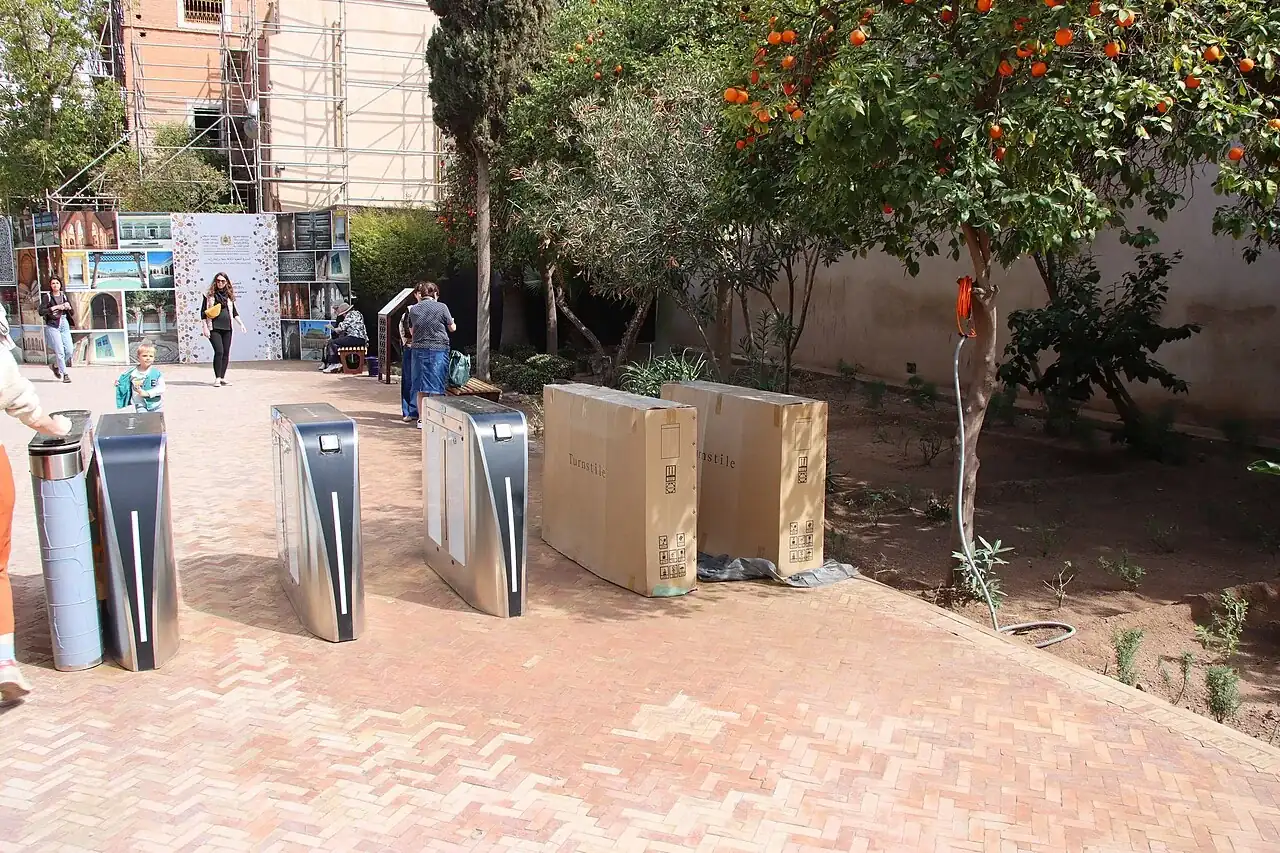
- Paving and bollards on the Bahia Palace entrance approach, an optional separate visit. Draceane / Wikimedia Commons, CC BY-SA 4.0 (licence). Resized and converted to WebP.
Photo credits
- Bab Agnaou, on a public street at the approach to the Marrakech Kasbah · Jakub Hałun / Wikimedia Commons, CC BY 4.0; resized and converted to WebP
- Layers of stone carving above the arch at Bab Agnaou · Robert Prazeres / Wikimedia Commons, CC BY-SA 4.0; resized and converted to WebP
- The Kasbah Mosque minaret, seen from the public approach · Jorge Franganillo / Wikimedia Commons, CC BY 2.0; resized and converted to WebP
- Marble columns and tomb markers in a chamber of the Saadian Tombs · Matt Kieffer from London, United Kingdom / Wikimedia Commons, CC BY-SA 2.0; resized and converted to WebP
- Zellige tilework at the Saadian Tombs in Marrakech · Elgaard / Wikimedia Commons, CC BY-SA 4.0; resized and converted to WebP
- Earthen walls, paths and plantings inside El Badi Palace in Marrakech · Jakub Hałun / Wikimedia Commons, CC BY 4.0; resized and converted to WebP
- The historic wall and gateway beside Place des Ferblantiers · 瑞丽江的河水 / Wikimedia Commons, CC BY-SA 4.0; resized and converted to WebP
- Paving and bollards on the Bahia Palace entrance approach, an optional separate visit · Draceane / Wikimedia Commons, CC BY-SA 4.0; resized and converted to WebP
Partner offer photo credits
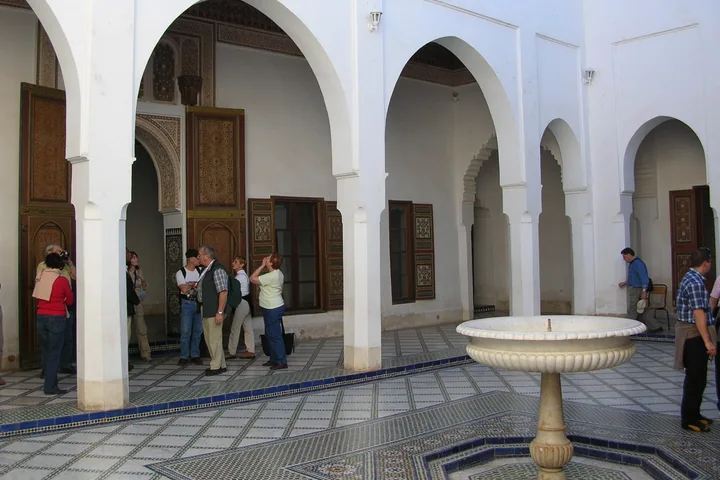
- Tiled courtyard and fountain at Bahia Palace in Marrakech: Bernard Gagnon, CC BY-SA 3.0 (cropped).