
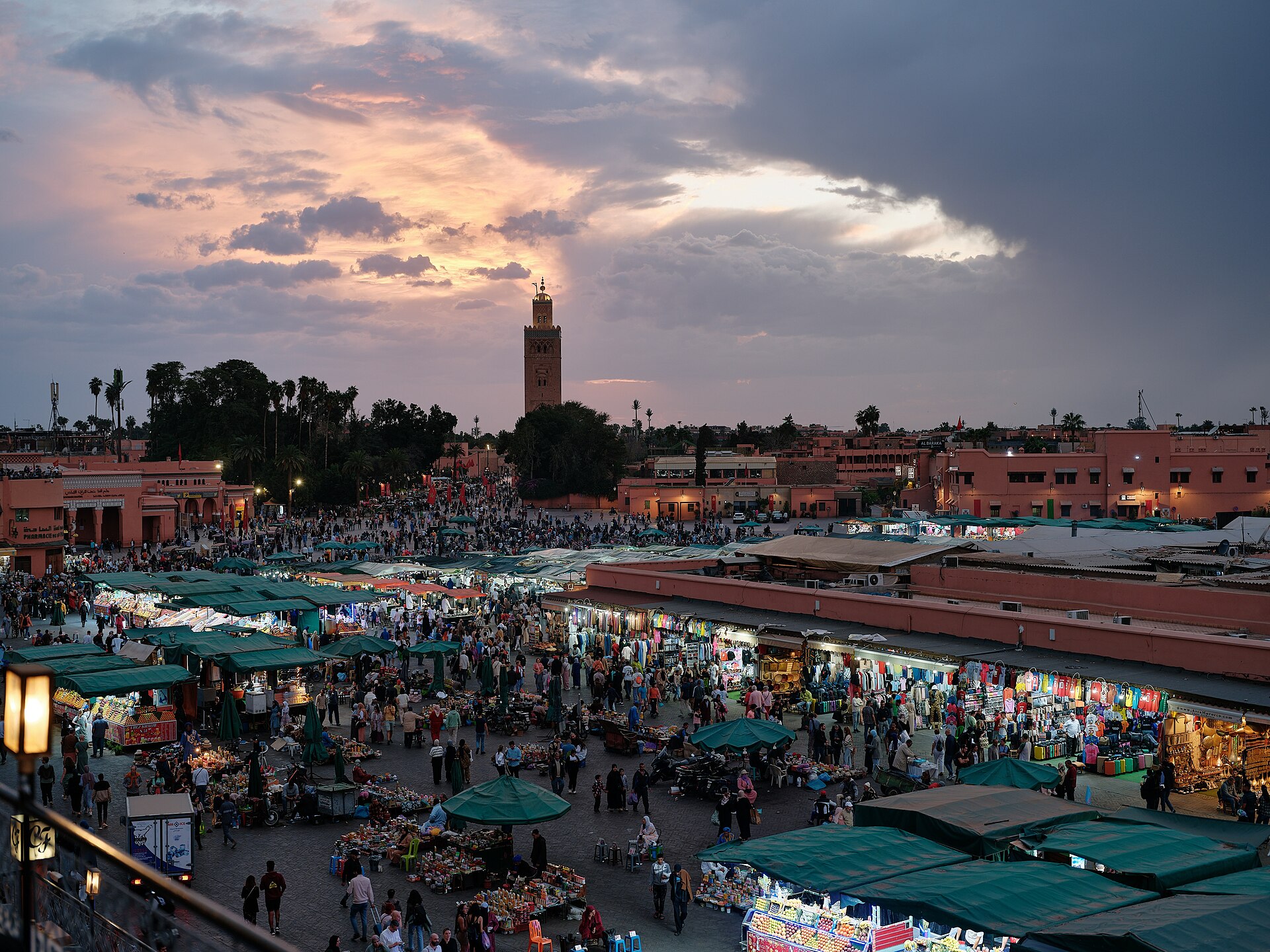

Marrakech rewards travellers who arrive with a plan and punishes those who don’t. Three days is enough to see it properly, the medina is where you should sleep, and the difference between a great trip and an exhausting one is usually decided before you land — in how many days you booked, which month you chose, and which neighbourhood you’re based in.
This guide covers the planning decisions: how long to stay, when to come, where to base yourself, what it costs, and who should probably choose a different Moroccan city. For the detailed lists — what to do, where to sleep, which excursions are worth it — you’ll find links to the full guides throughout.
Marrakech at a glance
- Days needed: 3 for the city, 5 to include a proper day trip
- Best months: March–May and September–November
- Airport: Menara (RAK), 15–20 min from the medina
- Where to sleep: Medina for atmosphere, Hivernage for quiet
- Language: Arabic and French; English widely spoken in tourism
- Currency: Moroccan dirham (MAD), cash still dominant in the souks
In a rush? Plan it like this
If you only read one section, read this one.
- First time in Morocco, 3–4 days: sleep in a riad inside the medina, spend two days in the city, take one half-day trip to the Agafay Desert (45 min away).
- Travelling with children or elderly parents: base yourself in Hivernage or Gueliz, visit the medina in the morning only, and skip the souks at night.
- Second visit, or you want the mountains: two days in the city, then move on — the Atlas villages and Essaouira deserve overnight stays, not day trips.
Is Marrakech right for your trip?
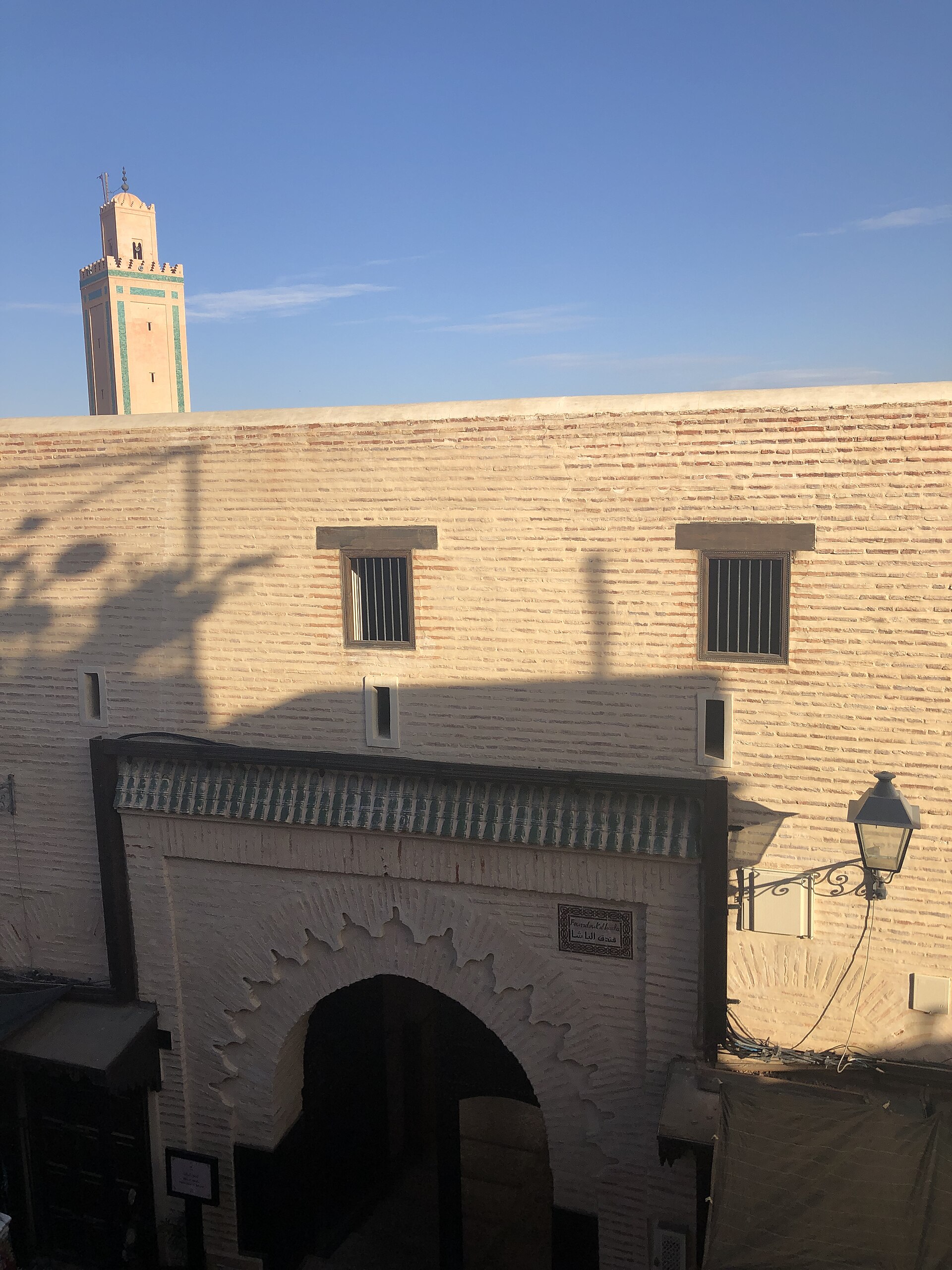
Marrakech is loud, crowded, and relentless. The medina’s alleys are narrow, motorbikes use them at speed, and you will be approached — by guides, by vendors, by people offering directions you didn’t ask for. Most travellers find the energy exhilarating. Some find it exhausting within a day.
You will probably love Marrakech if you enjoy dense cities, bargaining, food markets, and architecture you can walk into rather than look at from behind a rope.
You will probably struggle if you want quiet, predictability, or a beach. In that case, Essaouira on the Atlantic coast or Taroudant — often called “the little Marrakech” — deliver a similar Moroccan texture at a fraction of the intensity.
This is worth being honest about early, because a mismatched destination is the most expensive travel mistake there is, and no itinerary fixes it.
How many days you actually need
The most common planning error is booking two nights and trying to fit a desert excursion into them. Here is what each length of stay realistically buys you.
| Length | What you’ll manage | What you’ll miss | Best for |
|---|---|---|---|
| 2 days | Jemaa el-Fna, the main souks, one palace or garden | Any excursion; the quieter quarters | A stopover between other Moroccan cities |
| 3 days | The full medina at a human pace, the Mellah, gardens, a hammam | The Atlas and the coast | Most first-time visitors |
| 4–5 days | Everything above plus one full day trip | Very little | Travellers who want the mountains or the desert without moving hotels |
| 7 days+ | Marrakech as a base for Essaouira, Ouzoud and the Atlas villages | — | Slow travellers; anyone visiting in shoulder season |
Three days is the honest answer for a first visit. Two feels rushed in a way that colours the whole trip; five is comfortable only if you have a day trip planned, otherwise you will run out of city before you run out of days.
A shape for three days
This is not an hour-by-hour itinerary — Marrakech punishes those. It’s the rhythm that works, and the reasoning behind it, so you can rearrange it around your own arrival time.
Day one — the medina, gently. Arrive at your riad, drop your bags, and do nothing ambitious. Walk one loop of the nearest souk streets in daylight so you learn the landmarks you’ll navigate by later. Eat close to where you sleep. Reach Jemaa el-Fna an hour before sunset and stay through the transition — the square changes character completely, and seeing it happen is the point.
Day two — the anchors. Start early, while the alleys are still cool and the vendors are still setting up; this is the best hour of the day in the medina and almost nobody uses it. Choose one major site for the morning, then a garden or a courtyard when the heat arrives. Keep the afternoon deliberately light. If you’re going to do a hammam, this is the evening for it.
Day three — one step outside. Either a half-day excursion — Agafay at 45 minutes is the only one that fits comfortably into a three-day trip — or a slower day in the quarters most visitors skip, the Mellah in particular. Both are good answers; what doesn’t work is trying to do a full-day excursion and still see the city.
If you have a fourth day, insert it between days two and three rather than at the end. The medina gets easier and more rewarding the longer you spend in it, and most people finally relax on the day they were going to leave.
When to go, and what each season costs you
Marrakech has two problems with weather: summer heat and, less discussed, the crowd cycle that follows the pleasant months. Choosing the month is the single decision with the largest effect on how the trip feels.
| Period | Conditions | Crowds | Verdict |
|---|---|---|---|
| March–May | Warm days, cool evenings, gardens at their best | High | The best window — book early |
| June–August | Very hot, especially mid-afternoon | Lower | Viable only with a pool and a siesta habit |
| September–November | Warm, stable, the second good window | High in October | Excellent, slightly cheaper than spring |
| December–February | Mild days, genuinely cold nights | Peaks at Christmas and New Year | Good value if you pack layers |
April is the month most people ask about, and it deserves its reputation — but it also brings the highest riad prices of the year and full excursion buses. If that’s your window, read the detailed breakdown in Marrakech in April: weather, crowds and what to do before booking.
Two details that catch first-timers out: nights are much cooler than the daytime figures suggest, so a jacket is not optional outside summer; and Ramadan shifts each year, changing opening hours and the rhythm of the evening. Check the dates against your trip.
Where to base yourself
This decision matters more in Marrakech than in most cities, because the medina and the new town are two different holidays.
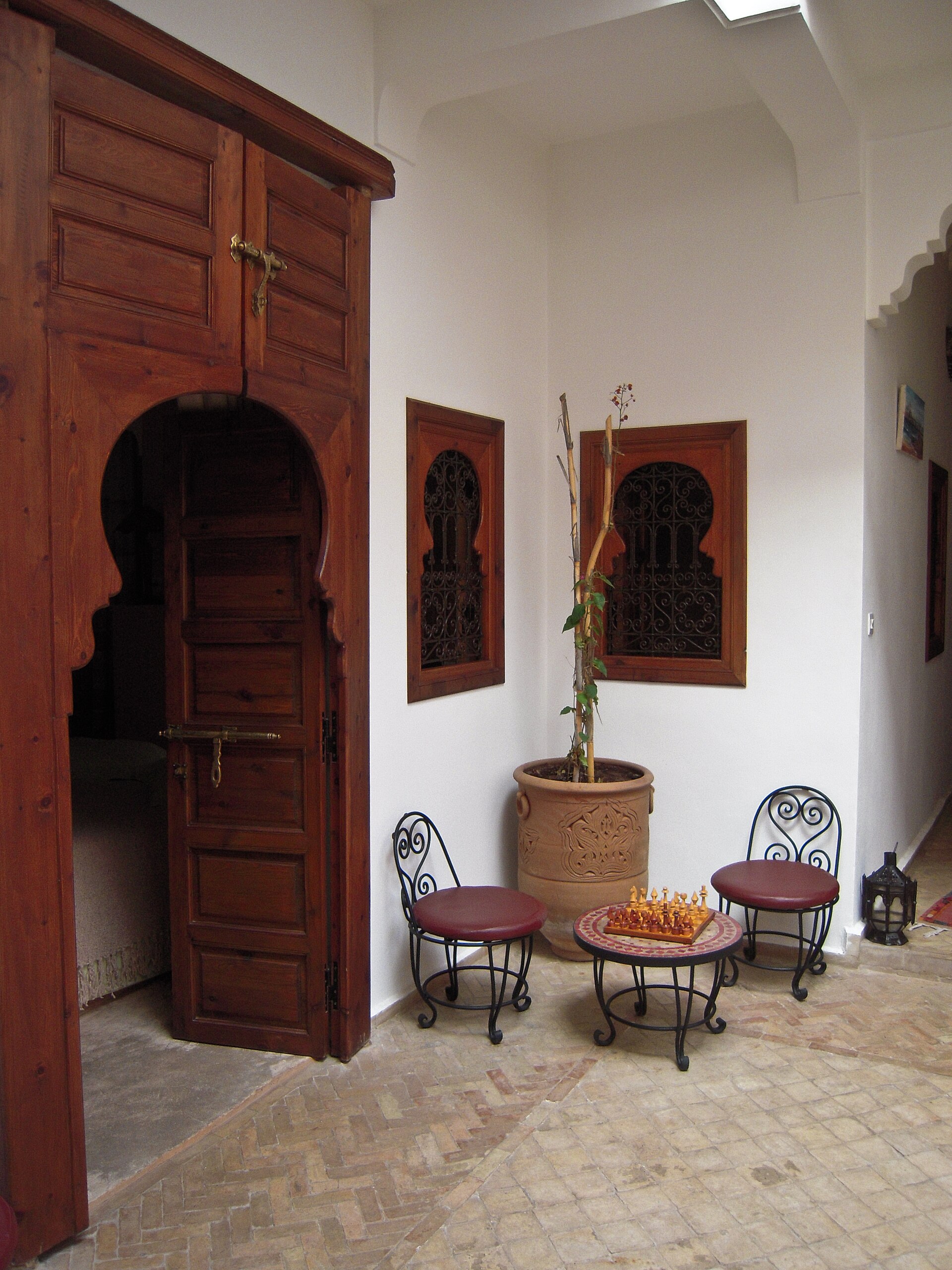
The medina puts you inside the experience: riads with courtyards, the call to prayer, five minutes from Jemaa el-Fna. The trade-off is noise, no car access to your door, and alleys that are genuinely hard to navigate at night on your first evening.
Gueliz and Hivernage give you pavements, taxis that can drop you at reception, quieter nights and easier access with luggage or a pushchair. The trade-off is that you commute into the atmosphere you came for.
For most first visits, a riad in the medina is the right call — and choosing the right quarter within the medina matters as much as choosing the riad itself. The full breakdown, quarter by quarter, is in Where to stay in Marrakech: the 5 best areas, and if you’ve already decided on a riad, how to choose the right riad area goes one level deeper.
Budgeting for it is a separate question, and a common source of sticker shock in both directions: see how much a riad in Marrakech costs for the ranges by season and standard.
What to build your days around
Marrakech is not a city of monuments to tick off. It rewards a rhythm: one anchor per half-day, and time left over to get lost on purpose.
Your anchors are the medina and its souks, Jemaa el-Fna at dusk rather than at noon, the gardens when the afternoon heat arrives, and the historic quarters — the Mellah, the old Jewish quarter, is the one most visitors skip and most regret skipping.
The full list, with what each anchor is actually like and how long to allow, is in things to do in Marrakech.
If you’d rather explore with a structure than a guide, we publish two free self-guided walking quests: the Souks Explorer Quest for the market maze, and Mellah Mysteries for the Jewish quarter. Both are free and take about two hours.
What eating in Marrakech is actually like
Food is where Marrakech converts sceptics, and where the gap between expectation and reality is widest. Three things are worth knowing before your first meal.
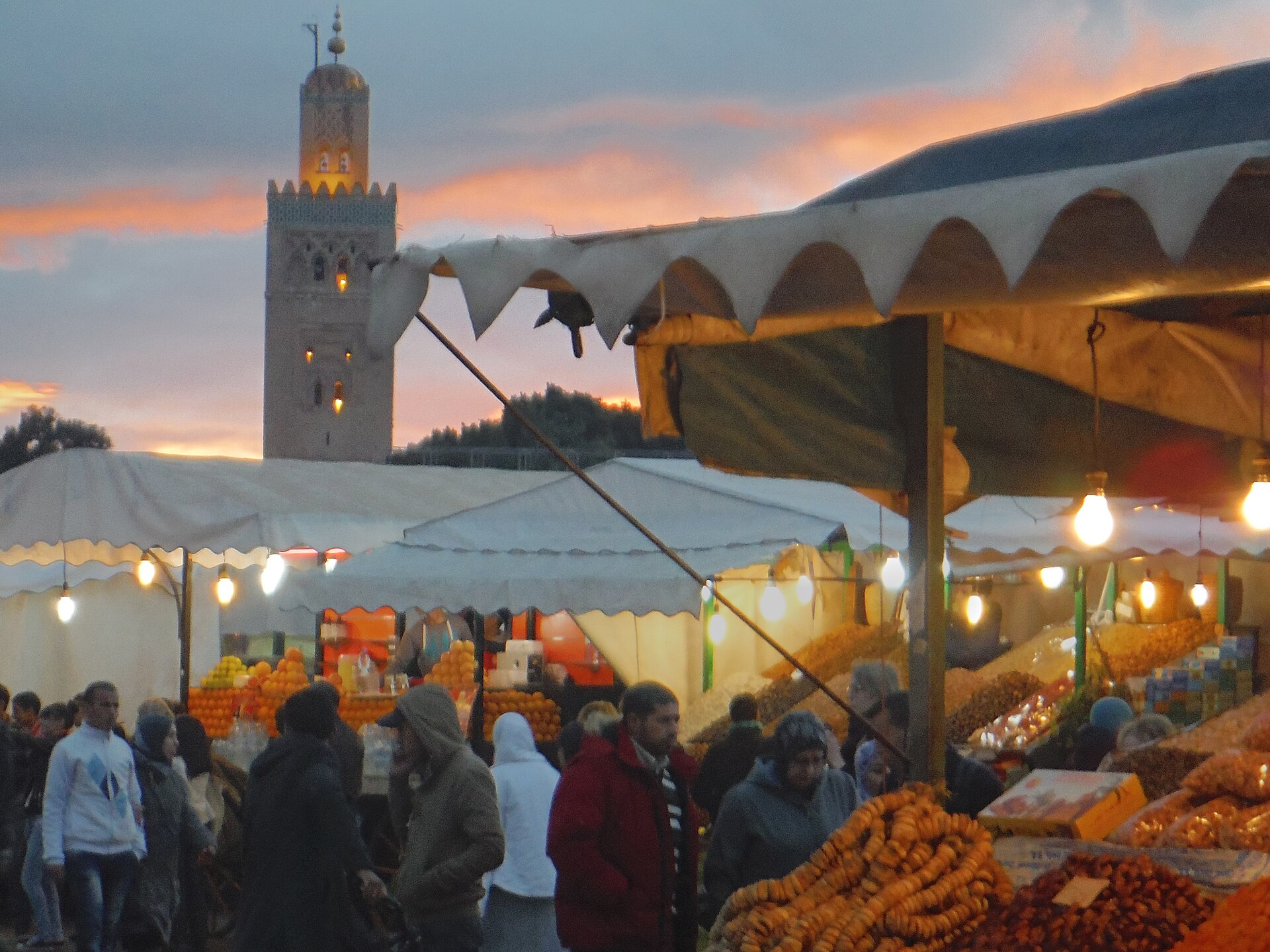
The best food is rarely the best-located. Restaurants with a view of Jemaa el-Fna charge for the view. The cooking that people remember tends to happen in courtyards you’d walk past, and in the small places locals use at lunchtime, when a tagine costs a fraction of the evening price for the same dish.
Lunch is the serious meal. Moroccan rhythm puts the weight of the day at midday. Restaurants that are quiet at 8pm may have been full at 1pm. If you’re eating one substantial meal a day, make it that one — and it will cost less.
Rooftops are for the hour before sunset, not for dinner. The temperature drops, the light goes copper over the Koutoubia, and the medina’s noise softens from where you’re sitting. It’s the most reliable good hour of the day in Marrakech, and it costs the price of a mint tea.
A practical note that saves arguments: in the food stalls on the square, confirm what you’re ordering and what it costs before anything arrives at the table. This is normal, expected, and not rude.
Day trips, with honest travel times
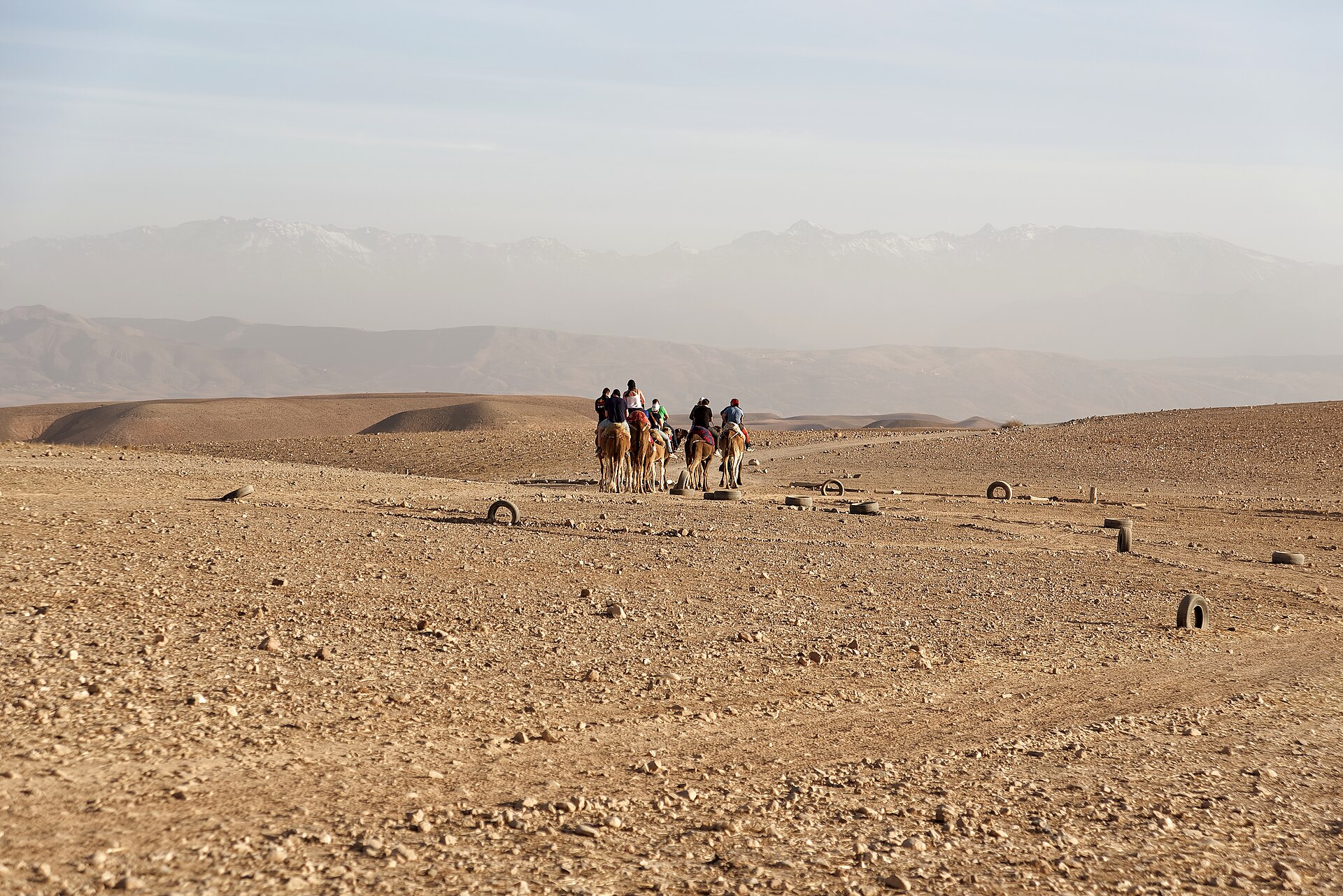
Travel time is what decides whether an excursion is worth a day of a short trip. These are one-way road times from the medina.
| Destination | One way | Time on site | Worth it if |
|---|---|---|---|
| Agafay Desert | 45 min | Half day | You want desert scenery without the distance |
| Ourika Valley & Atlas foothills | 1 hr | Half to full day | You want green, water and cooler air |
| Ouzoud Waterfalls | 2.5 hrs | Full day | You accept 5 hours in a vehicle for the payoff |
| Essaouira | 2.5 hrs | Full day | You’d rather stay overnight — better as a two-night stop |
| Aït Ben Haddou | 3.5 hrs | Full day | You’re prepared for a very long day over the pass |
One warning worth stating plainly: Agafay is not the Sahara. It is a stone desert an hour from the city, and it photographs beautifully — but if you came to Morocco for the great dunes of Merzouga, that is a three-day trip, not an afternoon. The distinction disappoints more first-time visitors than any other. We cover it honestly in is the Agafay Desert worth it.
For the full comparison of every excursion, including the ones we don’t recommend, see the best day trips from Marrakech.
Most day trips are easier to book in advance than to arrange on arrival, particularly in spring. Compare Marrakech day tours and prices →
Arriving and getting around
Menara Airport sits 15 to 20 minutes from the medina, which is close enough that the transfer should be the least eventful part of your trip — and often isn’t. Arranging it before you land removes the one moment where new arrivals reliably overpay.
Inside the city, walking covers the medina and taxis cover everything else. Petit taxis are metered in principle; agreeing the fare before departure saves the argument. Full options, with what each costs and what to avoid, are in the Marrakech airport transfer guide.
You do not need a car for Marrakech itself. You may want one only if you plan to base yourself in the city and explore the Atlas independently — and even then, a driver is often cheaper than parking and fuel once you account for the medina’s restrictions.
What a trip to Marrakech costs
Marrakech can be done cheaply or expensively, and the gap between the two is mostly accommodation. These are daily ranges per person, excluding flights.
| Style | Riad per night | What it gets you | Airport arrival |
|---|---|---|---|
| Budget | $40–70 | Simple riad or guesthouse, shared courtyard, breakfast usually included | Airport bus, 30 MAD ($3) |
| Mid-range | $80–150 | Boutique riad, private bathroom, rooftop — the sweet spot for most travellers | Petit taxi, 70–100 MAD ($7–10) |
| Comfort | $150–300+ | Design riad or Hivernage hotel, pool, in-house hammam | Private transfer, $12–18 per vehicle |
Beyond the room, the recurring costs are small and predictable: tourist tax at 25 MAD ($2.50) per person per night, a riad dinner at 150–250 MAD per person, a traditional hammam scrub at 200–500 MAD, and a local SIM with 10GB of data for 50 MAD ($5) at the airport arrivals hall.
Full breakdowns are in our dedicated guides — how much a riad in Marrakech costs for accommodation by season and standard, and the airport transfer guide for every arrival option compared.
Two costs consistently surprise people. Riad prices in April and October can rise sharply against February for the same room, so the month you choose affects your budget more than your spending habits do. And the souks run on cash — card acceptance is patchy once you leave the main streets.
Dress, etiquette and the practical details
None of this is complicated, but knowing it in advance removes the low-level uncertainty that makes a first day tiring.
Dress. Marrakech is used to visitors and there is no strict code, but covered shoulders and knees attract markedly less attention in the medina, for men and women alike. Comfortable closed shoes matter more than anything else you pack: the medina’s surfaces are uneven, and you will walk further than you plan to.
Photographs of people. Ask first, and expect that performers on the square — musicians, storytellers, animal handlers — will ask for payment afterwards. That’s the arrangement, not a scam. Deciding whether you want the photograph before you raise the camera avoids an awkward negotiation.
Bargaining. It’s expected in the souks and absent in fixed-price shops and supermarkets. Two rules make it painless: don’t start negotiating for something you’ve decided not to buy, and be willing to walk away without irritation. The price finds its level quickly once both sides know you’re serious.
Cash, connectivity and water. Carry more small notes than feels necessary — the souks, taxis and stalls all run on cash, and change is a recurring friction. Mobile data is cheap and widely available, and worth arranging before you need a map in an alley. Tap water is generally avoided by visitors; bottled is inexpensive and universal.
Friday. It’s the main prayer day, and the city moves differently — some businesses close around midday and the medina is quieter in the early afternoon. It’s a good day for gardens and a poor one for shopping.
Mistakes that spoil a first trip
Following an unrequested guide
Someone tells you the square is closed, or the tannery is “this way today”. It isn’t. The walk ends at a shop, and the exit is awkward. A polite, continuous “no thank you” while still walking is the whole technique.
Booking two nights and a desert excursion
You will spend one of your two days in a vehicle and see almost nothing of the city. Either add a night, or keep the excursion close — Agafay at 45 minutes, not Aït Ben Haddou at three and a half hours.
Arriving at Jemaa el-Fna in the middle of the day
At noon it is a hot, empty square with orange juice stalls. At dusk it becomes the thing you came to see. Same place, two entirely different verdicts.
Underestimating the medina at night
Arriving after dark on your first evening, with luggage, into unlit alleys, is the single most common start to a bad first impression. Ask your riad to arrange a meeting point.
Frequently asked questions
How many days do you need in Marrakech?
Three days for the city itself, five if you want to include a full day trip without rushing. Two days works only as a stopover between other Moroccan cities.
What is the weather like in Marrakech in April?
April is one of the two best months of the year — warm days, cool evenings, and gardens at their peak. It is also among the busiest and most expensive. The month-by-month detail is in our April guide, and May is covered separately.
Is Marrakech safe for first-time visitors?
Yes, with ordinary city awareness. The persistent issues are commercial rather than dangerous: unrequested guides, inflated fares, and pressure in the souks. Agreeing prices in advance removes most of them.
Should I stay in the medina or the new town?
The medina for atmosphere and walkability to the sights; Gueliz or Hivernage for quiet, car access and easier travel with children or luggage. Our area-by-area guide compares all five options.
Can you see the Sahara on a day trip from Marrakech?
No. The Agafay Desert is 45 minutes away and is a stone desert, not sand dunes. The dunes at Merzouga are a three-day round trip. Anyone selling you the Sahara in a day is selling you Agafay.
Do I need to book day trips in advance?
In spring and autumn, yes — the good operators fill up, and arranging on the day usually means paying more for a worse slot. Compare day trips and availability →
Your next decision
Everything above comes down to one choice, and it’s the one to make first: how many nights, and in which month. Fix those two, and where to sleep, what to see and which excursion to take all follow without difficulty.
Once your dates are set, start here:
- Where to stay in Marrakech — pick your quarter before you pick your riad
- Best day trips from Marrakech — with travel times, so you can match one to your itinerary
- Marrakech airport transfer guide — arrange this before you fly
Planning your Marrakech days?
Compare guided experiences and day trips with free cancellation — useful for locking in spring dates before they sell out.