

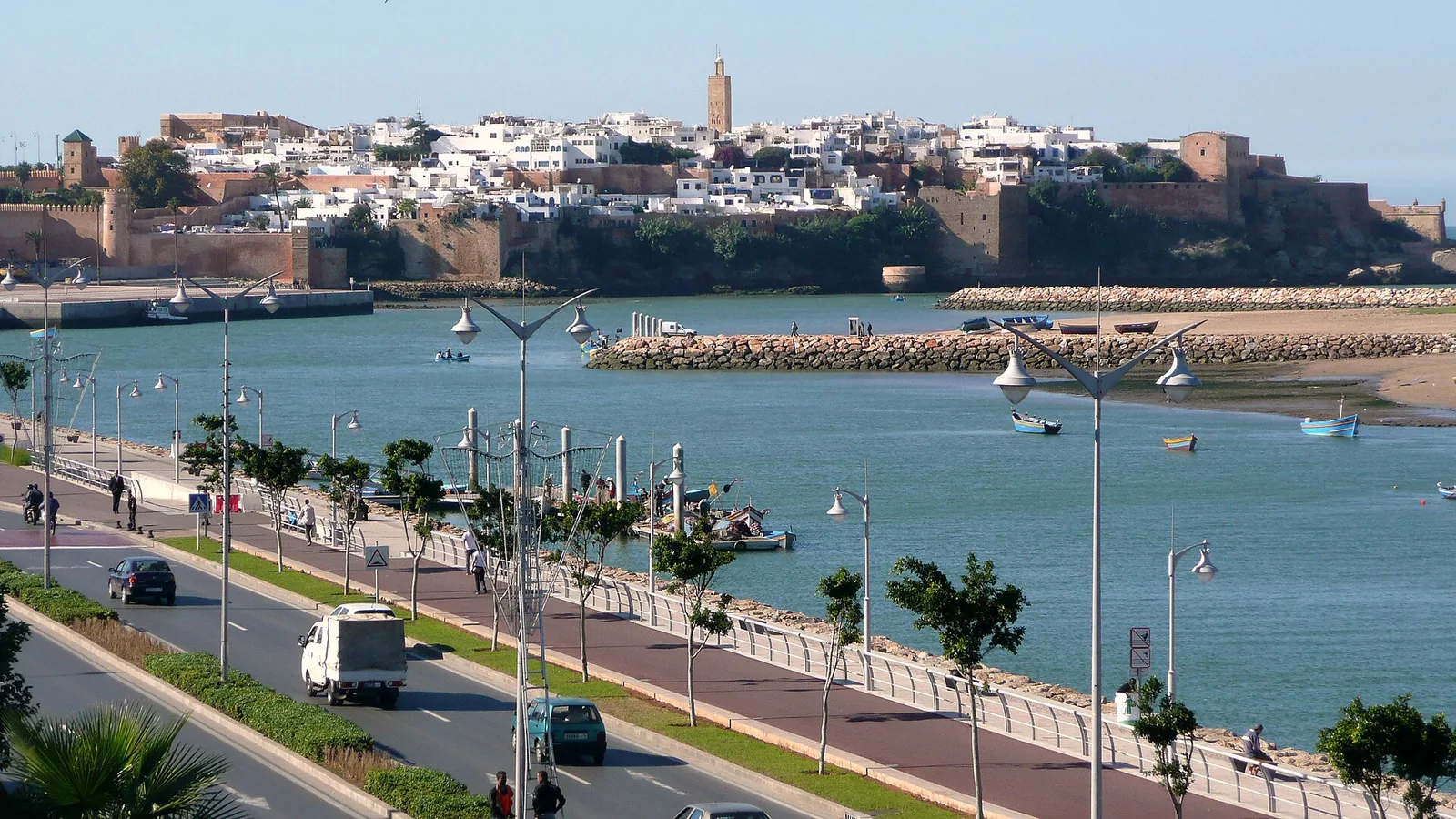
Rabat is the Morocco most travellers never see. The administrative capital, the diplomatic heart, the city Moroccans themselves rate as the country’s most liveable. No tourist crush. No medina hassle. A blue-and-white kasbah on a cliff above the Atlantic, Roman ruins inside the walls, a 12th-century minaret that was meant to be the world’s tallest, a wide French-built ville nouvelle that actually works as a city.
It’s also one of the easiest day trips in Morocco — 1 hour by train from Casablanca. This guide covers what to see in 1 or 2 days, where to stay, where to eat, and why Rabat deserves more than a transit stop. Last reviewed May 2026.
⚡ Rabat quick facts
- Best for: Refined city break, history lovers, day trippers from Casablanca
- Skip if: You want medina chaos and souk shopping (Marrakech/Fes do that better)
- Time needed: 1 day for highlights, 2 nights for deeper visit
- Best season: March–June and September–November (Atlantic-mild)
- Budget: €60–150/day mid-range, €200+ luxury
- Last reviewed: May 2026
Is Rabat worth visiting?
Yes — but for very specific reasons. If your Morocco trip is short (under 7 days) and you haven’t been to Marrakech or Fes, Rabat is third priority at best. If your trip is longer, or if you’ve already done the imperial cities and want a third dimension, Rabat is the most rewarding addition. The travellers who love it tend to be those allergic to the souk-pressure of Marrakech and the medina-density of Fes — Rabat is calm, walkable, and unmistakably North African without being overwhelming.
Bonus: it’s a 1-hour train ride from Casablanca. That makes it the easiest premium day trip in the country. Combine it with a Casablanca arrival or stopover.
5 best things to do in Rabat
1. Kasbah des Oudayas ⭐ Don’t miss
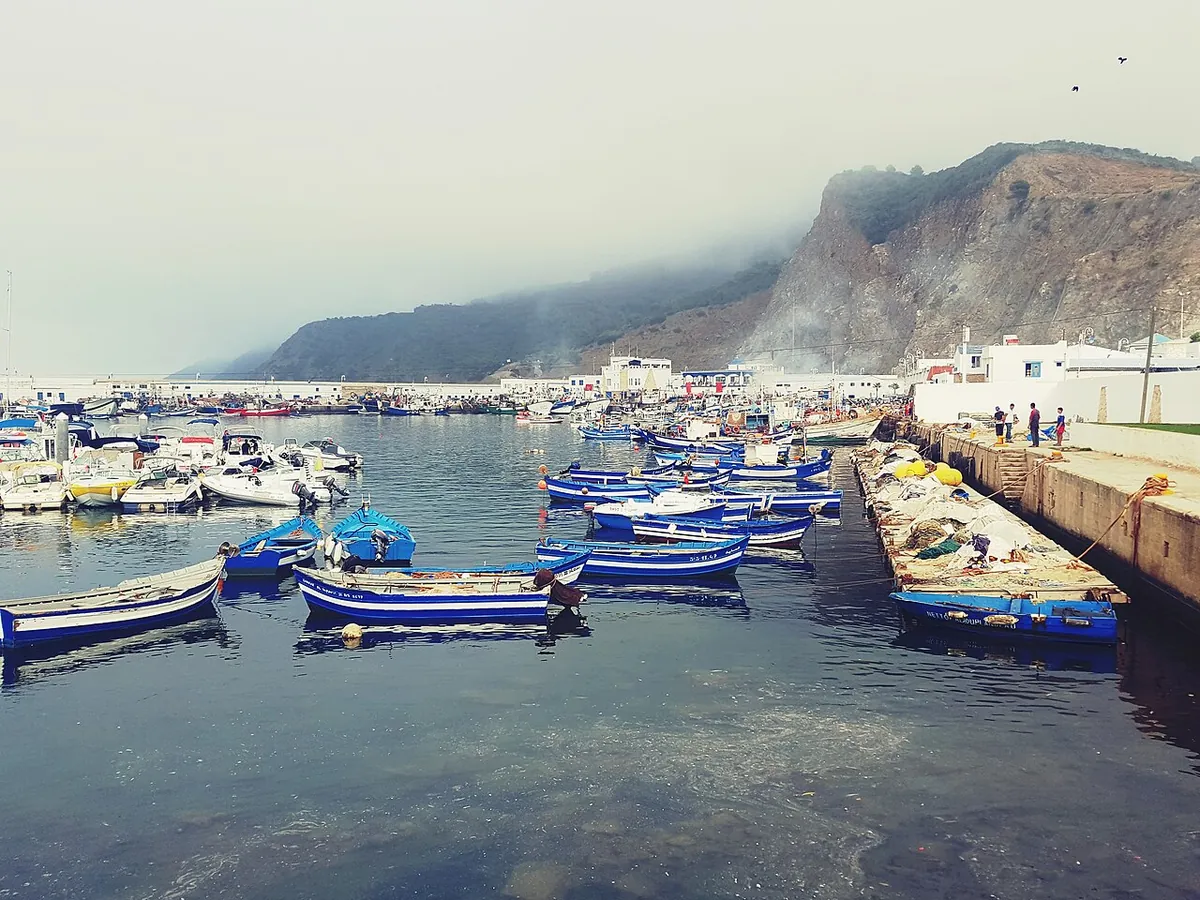
The Kasbah is a 12th-century fortress on a cliff above the mouth of the Bou Regreg river, with whitewashed alleys painted blue at the lower half (the Chefchaouen-blue of the north, but here painted by Andalusian refugees in the 17th century). Walk through the monumental Almohad gate (Bab Oudaïa, one of the most beautiful in Morocco), wander the residential lanes, drink mint tea at Café Maure on the ramparts at sunset.
Practical: Free entry to the Kasbah itself. The Andalusian Garden inside (free) and the small museum (10 MAD) are worth a visit. Allow 1.5–2 hours.
2. Tour Hassan and Mohammed V Mausoleum
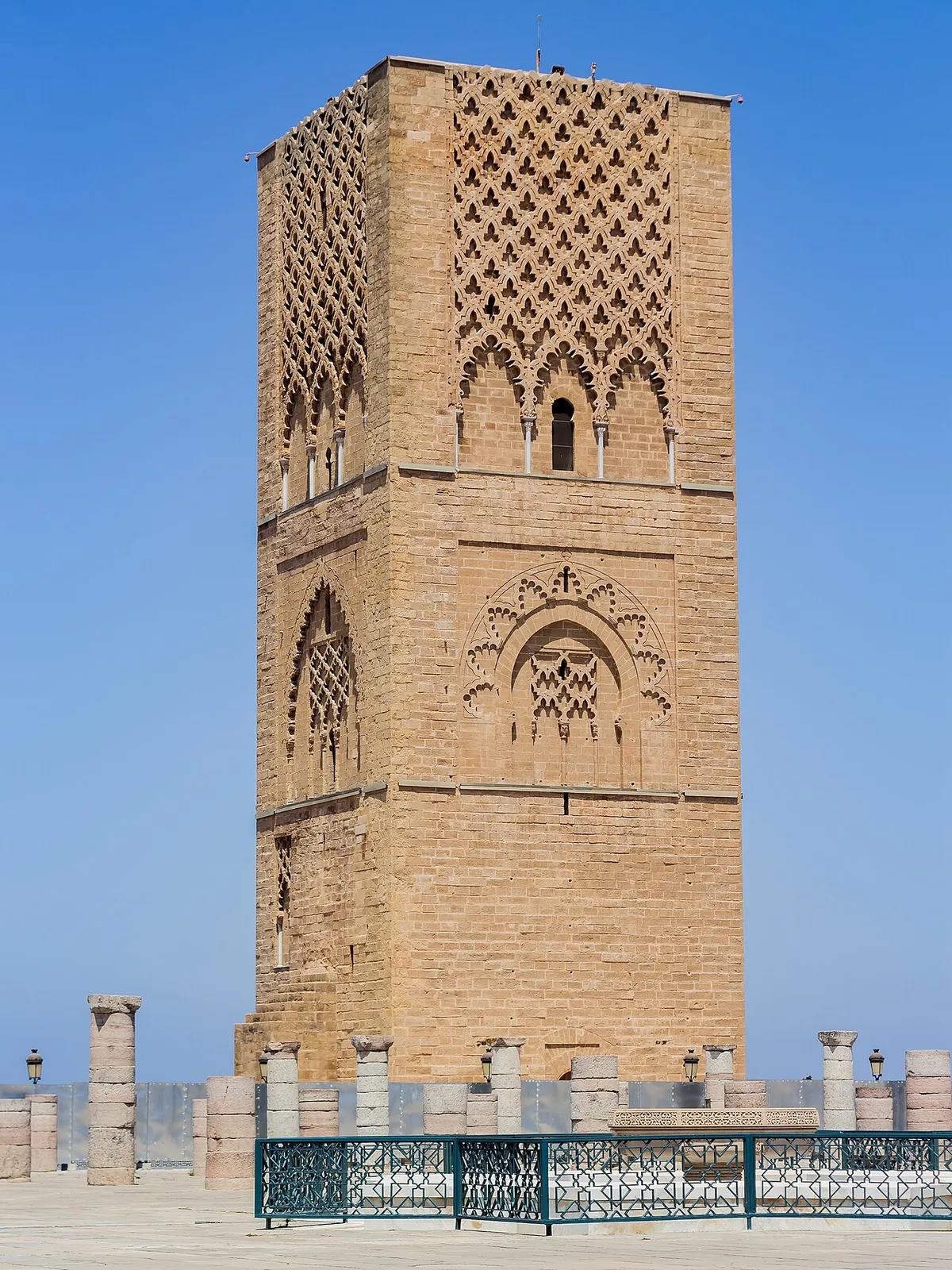
The 12th-century Tour Hassan was meant to be the world’s tallest minaret — construction halted at 44m (out of a planned 80) when the sultan died in 1199. The 200 unfinished columns of what would have been the world’s second-largest mosque still stand around it, with the modernist Mohammed V Mausoleum facing it across the plaza. The mausoleum (1971) is the only royal tomb in Morocco non-Muslims can enter.
Practical: Both are free. Open daylight hours. Modest dress for the mausoleum. Allow 1 hour.
3. Chellah Roman ruins + Marinid necropolis
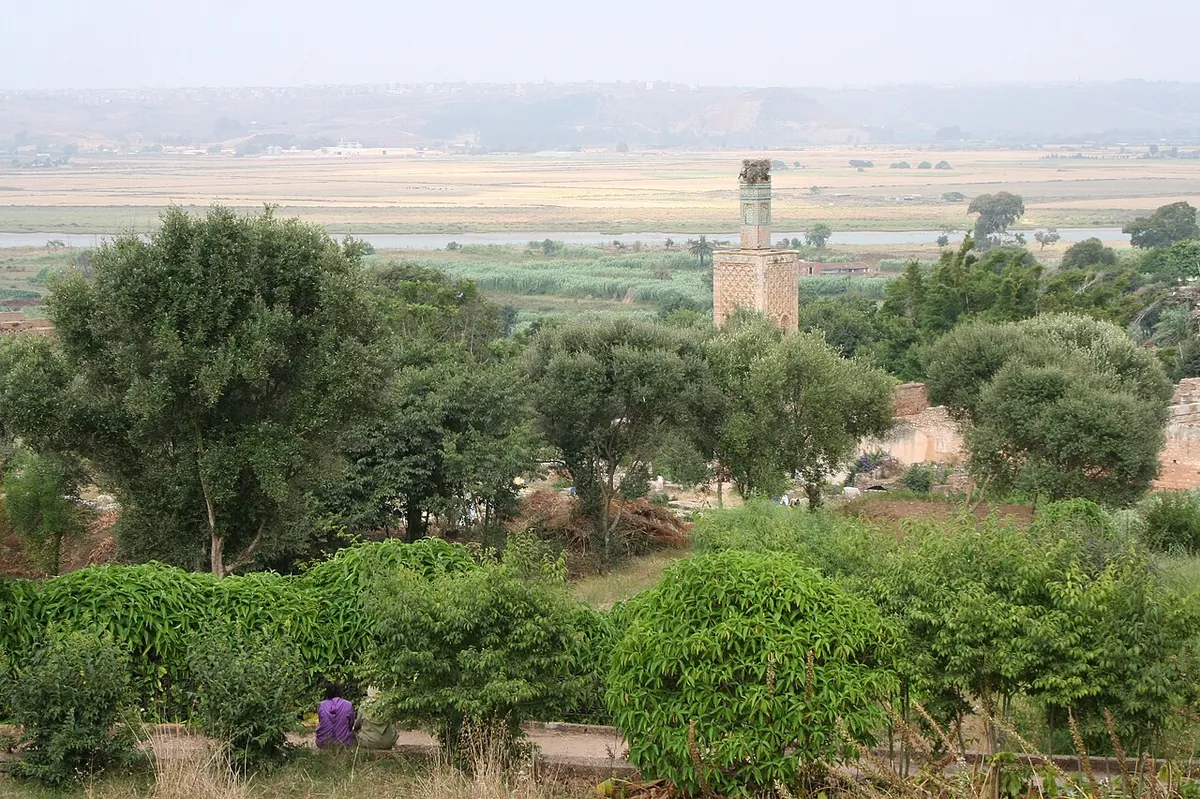
The most underrated site in Morocco. A 14th-century Marinid burial complex built on top of an abandoned Roman city (Sala Colonia), surrounded by walls full of nesting storks. Wildflowers in spring. Roman mosaic fragments visible. A genuinely peaceful 90 minutes inside the walls of one of the most layered archaeological sites in North Africa.
Practical: Open 9am–6pm. Entry 70 MAD. 10 minutes from the city centre by petit taxi.
4. Ville Nouvelle & Avenue Mohammed V
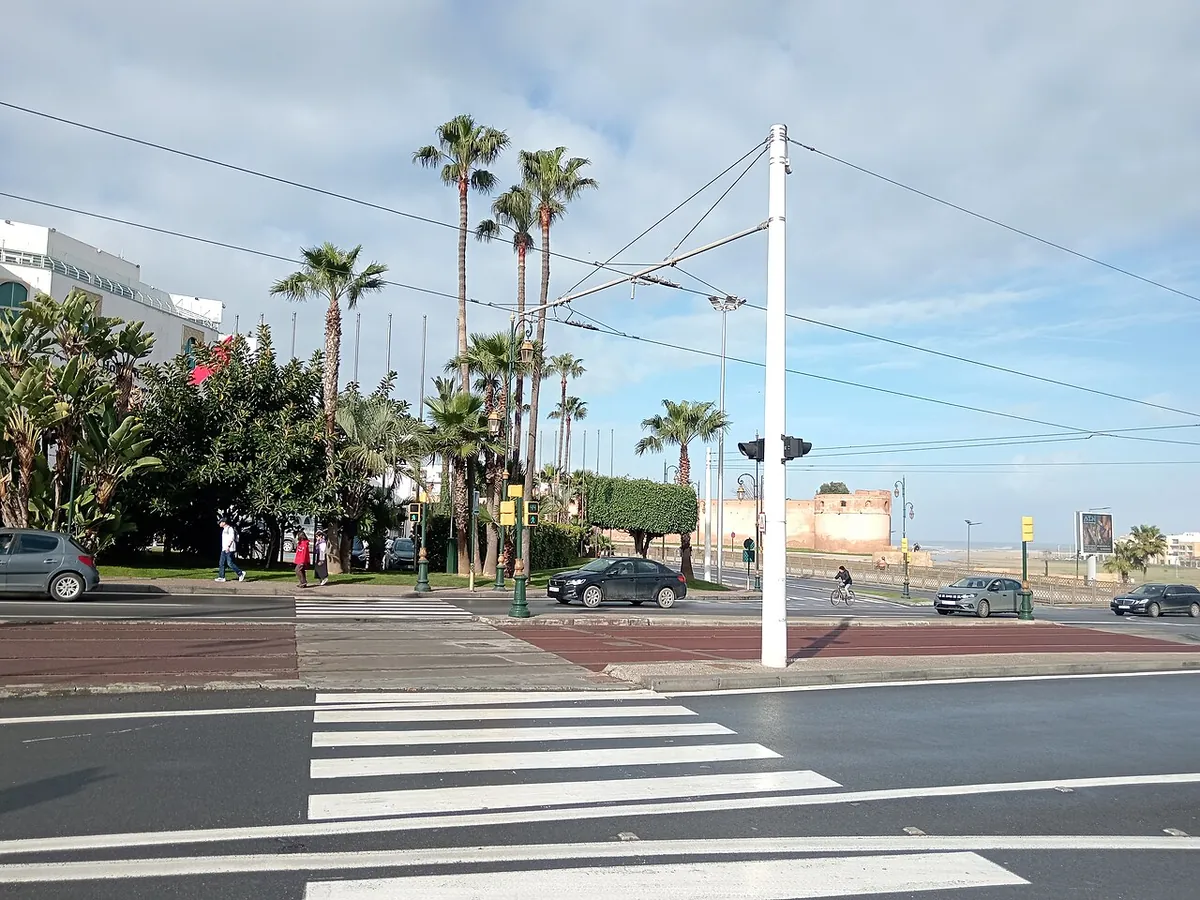
The early-20th-century French-built city centre — wide boulevards, palm trees, art deco façades, the Parliament, the Cathedral St-Pierre, and the long pedestrian Avenue Mohammed V from the medina to the train station. Walking pleasure no other Moroccan city offers. Combine with a coffee at one of the historic terrace cafés (Café Maure, Café Renaissance).
5. Rabat Medina (small but useful)
The Rabat medina is much smaller than Fes or Marrakech (just 1 sq km) and easier to navigate. Mostly residential with a few good craft shops on Rue des Consuls (carpets, jewellery, leather). Less pressure than other medinas — you can browse without committing. Stop at the small but excellent Mohammed VI Museum of Modern Art at the medina’s edge.
Pre-book Rabat tours and day trips Guided Rabat city tours, day trips from Casablanca, and Volubilis combinations – the easiest way to cover Rabat's spread-out highlights in a single day.
- Rabat full-day private city tour (Kasbah + Tour Hassan + Chellah)
- Rabat day trip from Casablanca (round-trip)
- Rabat + Volubilis + Meknes day trip
Affiliate disclosure: CityQuest Morocco may earn a small commission if you book through these links — at no extra cost to you. We only link to operators we’d use ourselves.
Where to stay in Rabat
| Area | Vibe | Price band | Best for |
|---|---|---|---|
| Medina / Kasbah | Restored riads, traditional, atmospheric | €70–250 | Atmosphere lovers, walkers |
| Hassan / Centre | Hotels near Tour Hassan + train station | €80–250 | First-timers, train arrivals |
| Agdal / Hay Riad | Modern residential, restaurants, business hotels | €90–300 | Long stays, business travellers |
| Souissi | Diplomatic quarter, large hotels with grounds | €120–500 | Couples wanting quiet luxury |
For specific hotel recommendations across budgets, see our Where to Stay in Rabat guide.
Food and where to eat
Rabat’s food scene is more cosmopolitan than its size suggests — Atlantic seafood, Moroccan classics, French bistros, Lebanese, contemporary fusion. Fewer tourists means restaurants serve actual local clientele.
- Le Dhow (Bou Regreg river boat) — restaurant on a converted dhow with sunset views of the Kasbah. Mediterranean menu, €30–50.
- Dinarjat (medina) — fine Moroccan dining in a restored riad. Set menu, ~€40–60. Live oud music nightly.
- Tajine wa Tanjia (medina) — casual local Moroccan, €10–20. Try the Rabat-style tanjia (slow-cooked beef).
- Café Maure (Kasbah des Oudayas) — sunset mint tea on the ramparts overlooking the river mouth. €3–5 just for the tea, but the view.
Getting there and around
By train
The simplest way. Rabat Ville is the main station, walking distance to Tour Hassan and the medina. Casablanca-Rabat: 1 hour, hourly trains, €5–12. Tangier-Rabat: 1h 30 by Al-Boraq high-speed line (€20–35). Fes-Rabat: 2h 30 (€15–30). Marrakech-Rabat: 4h 30 direct or 5h via Casablanca change (€25–40).
By air
Rabat-Salé Airport (RBA) has limited international service (mostly Paris, Madrid, Brussels). Most travellers fly into Casablanca CMN (60 km away) and take the train. Total Casablanca airport to Rabat: ~2 hours via train transfer at Casa Voyageurs.
Inside Rabat
Walking covers the Kasbah, Tour Hassan, medina, and ville nouvelle. Petit taxis (blue) are cheap and metered (15–30 MAD for most rides inside the city). The Rabat tram (T1, T2) connects the centre with Salé across the river — useful for reaching the train station from outlying neighbourhoods.
Practical tips
- One day or two? One day covers Kasbah + Tour Hassan + Chellah. Two days adds medina shopping, a longer ville nouvelle walk, and a meal at Le Dhow.
- Best photo time at the Kasbah: 5–6pm in summer, 4–5pm in winter. Light hits the blue walls perfectly.
- Skip: the Royal Palace exterior — it’s not visitable and the gates are visually less interesting than visitors expect. Skip Salé (across the river) unless you have 3+ days.
- Cash: ATMs are widely available. Card payment is standard in mid-range and up restaurants.
- Language: French is universal in Rabat (more so than Marrakech). English in tourist-facing roles. Arabic mother tongue.
- Safety: the safest of Morocco’s major cities. Solo female travellers report a more relaxed experience than in Marrakech’s souks.
📱 Stay connected in Morocco
Get a Morocco eSIM before you fly — instant activation, no roaming, around €5–15.
Affiliate link.
FAQ — Rabat
How many days do you need in Rabat?
One full day for the highlights (Kasbah, Tour Hassan, Chellah). Two days for a more relaxed visit including the medina, the ville nouvelle walk, and a proper meal. Three days if you want to add Salé and a slower pace.
Is Rabat worth visiting?
Yes if your trip is 7+ days, or if you want a refined Moroccan city without the tourist intensity of Marrakech. Skip on a 5-day trip that hasn’t included Marrakech or Fes — those are higher priority.
Is Rabat a day trip from Casablanca?
Yes — 1 hour by train each way, easy day trip. Take the 8:00am train, return on the 6:00pm. You’ll cover Kasbah + Tour Hassan + Chellah + lunch. Skip the medina shopping if rushed.
Can you swim in Rabat?
The beaches at the river mouth (Plage de Rabat, Plage des Oudayas) are mainly used for surfing — Atlantic water is cold (15–20°C). Locals walk the seafront promenade rather than swim. For swimming, head to El Jadida, Saidia, or wait for a Mediterranean stop.
What is Chellah and is it worth the entry fee?
Chellah is a 14th-century Marinid Muslim necropolis built on top of a 1st-century Roman city (Sala Colonia). The 70 MAD entry is excellent value — you get Roman mosaics, Marinid tomb architecture, hundreds of nesting storks, and a peaceful 90 minutes. The most underrated archaeological site in Morocco.
Is Rabat safe to walk at night?
The ville nouvelle and Hassan area are well-lit and busy with locals until late. The medina becomes quiet after 9pm — fine to walk if you’re staying inside but take a petit taxi rather than walking long distances. Standard urban precautions apply.